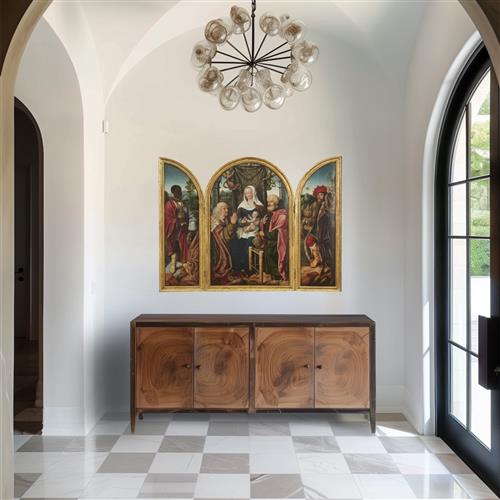
Lot 10
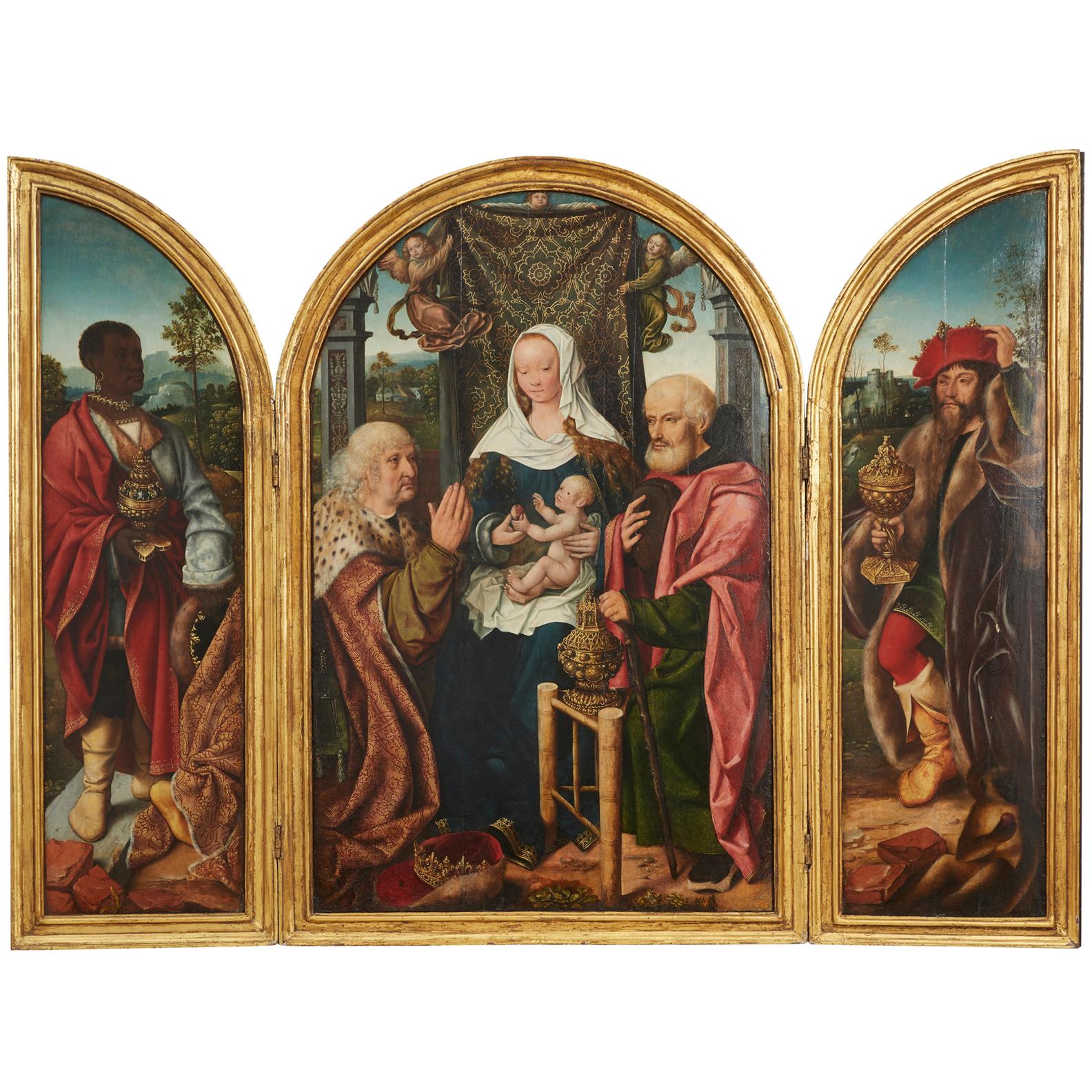
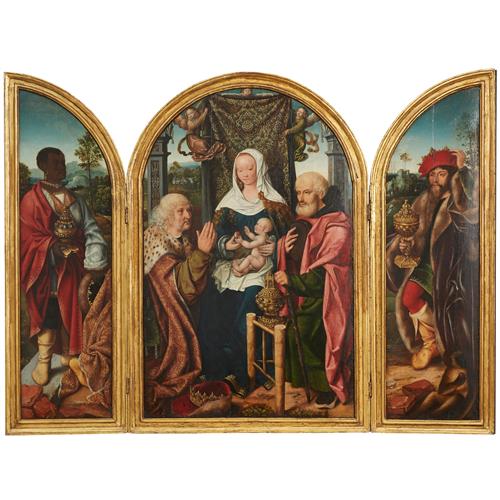
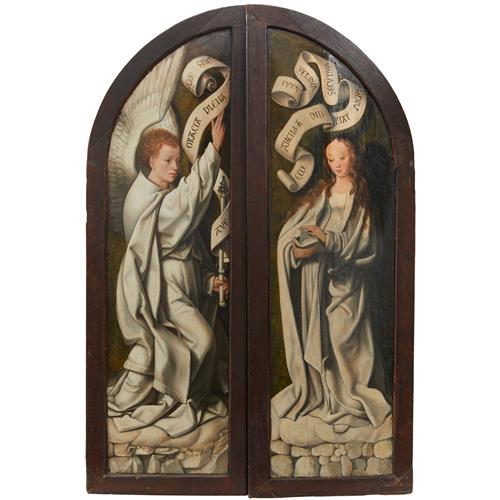
The Adoration of the Magi; and The Annunciation
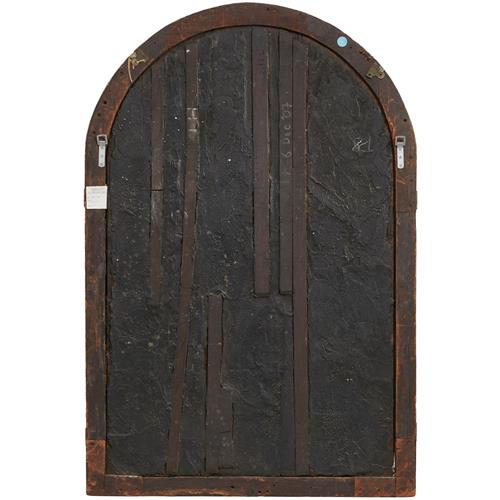
oil on panel, triptych
central panel 115.5 x 73.6cm; wings each 115.5 x 33cm (126 x 170cm open)
Estimate $30,000 - $40,000
Bernard Marmaduke Fitzalan-Howard, 16th Duke of Norfolk, KG, GCVO, GBE, TD, PC (1908-1975), by whom donated in 1948
The Property of a Religious Institution
Christie's, London, Important Old Master & British Pictures Including Works from the Collection of Anton Philips, 6 December 2007, lot 17
where purchased by Robert Compton Jones (accompanied by a copy of the original purchase receipt and a copy of the auction catalogue)
Goddard, S. H., 'The Master of Frankfurt and his shop', Verhandelingen van de Koninklijke Academie voor Wetenschapppen, Letteren en Schone Kunsten van België, 46, 1984, no. 38, pp. 154-5, nos. 90, the wings open, and 91, the wings closed (incorrectly described as that listed by M.J. Friedländer, Early Netherlandish Painting, VII, Leiden and Brussels, 1971, p. 75, no. 125e).
RELATED WORKS:
Master of Frankfurt, Triptych of the Adoration of the Magi; reverse: Annunciation in grisaille, oil on panel, 115 x 85cm, 115 x 38cm, National Gallery of Denmark, Copenhagen (no. 1643)
Master of Frankfurt, The Adoration of the Magi c.1510, tempera and oil on wood (oak), 100 x 72cm, Staatsgalerie, Stuttgart (inv. Nr. L 27)
LOT ESSAY:
This finely executed triptych, The Adoration of the Magi, with outer wings depicting The Annunciation, is a distinguished example of the work of the Master of Frankfurt and his Antwerp workshop. Tentatively identified as Hendrik van Wueluwe, active in Antwerp from 1483 until his death in 1533, the Master was a central figure in the development of the Antwerp school and a key contributor to the flourishing of Northern Renaissance painting.
The artist's identity has long been the subject of scholarly debate. Known only by the moniker of
"Master of Frankfurt," he was originally thought to be German due to two major commissions for patrons in Frankfurt: Altarpiece of the Holy Kinship for the Dominican church (Historisches Museum, Frankfurt) and the Crucifixion triptych for the Humbracht family (Städelsches Kunstinstitut, Frankfurt).(1) However, stylistic analysis and the use of Baltic oak panels (typical of Netherlandish production) suggest that these works were painted in Antwerp, then a thriving centre of artistic and commercial exchange, and shipped to Frankfurt. Among other proposed identifications, Hendrik van Wueluwe has gained the most acceptance. A prominent member of the Antwerp Guild of Saint Luke, van Wueluwe served as dean six times and trained at least seven apprentices. His connection to Woluwe, where Hugo van der Goes spent his final years, further supports the stylistic lineage observed in the Master's work. The Master's earliest known works are among the first documented in Antwerp and his workshop was known for its high output and consistent quality, producing paintings for both private devotion and public display.
The present triptych belongs to a group of closely related compositions, including other examples in Stuttgart at the Staatsgalerie (fig. 8) and Copenhagen at the National Gallery of Denmark. While the Stuttgart version includes a donor portrait as Balthasar, the present work adheres to a more traditional iconography, portraying Balthasar on the left wing as the Moorish king presenting myrrh. The central panel depicts the Virgin with the infant Christ seated on her lap offering him an apple (an allusion to Original Sin and Christ's role as Redeemer - a compositional motif used in other works by the Master). To the left of the Virgin kneels a king with his crown beside him (perhaps this is a disguised portrait of the donor or an esteemed ruler) and Melchior to the right presenting frankincense. The right wing depicts Caspar presenting gold. The outer wings, depicting the Annunciation, frame the narrative with the moment of divine incarnation.
The exceptional quality of this work, particularly in the rendering of textiles and brocade patterns, speaks to the skill not only of the Master himself but also of his highly trained assistants. As Stephen Goddard has noted in his article 'Brocade Patterns in the Shop of the Master of Frankfurt, An Accessory to Stylistic Analysis', such brocade motifs are distinctive to the Master's shop and serve as valuable tools for stylistic analysis.(2)
Madeleine Mackenzie
(1) Hand, J. O., 'Saint Anne with the Virgin and the Christ Child by the Master of Frankfurt', Studies in the History of Art, National Gallery of Art, 1982, vol. 12, p. 43-52
(2) Goddard, S., 'Brocade Patterns in the Shop of the Master of Frankfurt, An Accessory to Stylistic Analysis', The Art Bulletin, 67, no. 3 (September 1985), pp. 401-41
Old Master Paintings from the Robert Compton Jones Collection
AUCTION
Sale: LJ8812
6:00pm - 8 December 2025
36-40 Queen Street, Woollahra
VIEWING
MELB: Friday 21 - Sunday 23 November (Highlights), 10am-4pm, 2 Oxley Rd, Hawthorn, VIC
SYD: Friday 5 - Sunday 7 December, 10am-4pm, The Bond, 36-40 Queen St, Woollahra, NSW
CONTACT
Madeleine Mackenzie
sydney@leonardjoel.com.au
SIMILAR ITEMS
Lot 14
FRANCESCO GUARDI (Venice, 1712-1793) The Island of San Giorgio Maggiore from the West; and View of the Cannaregio, with the Ponte de...
Estimate: $500,000-700,000
Lot 7
LUCA SIGNORELLI (Cortona, c. 1450-1523) Saint Michael c.1502 oil on panel 49.5 x 20.5cm (56.5 x 28.1cm framed)
Estimate: $140,000-180,000
Lot 11
BATTISTA DOSSI (Ferrara, c.1475-1548) The Adoration of the Shepherds oil on panel 74 x 57.5cm (99 x 83.5cm framed)
Estimate: $100,000-150,000
Lot 2
Attributed to JACOPO DI CIONE (Florence, active c.1362-1398/1400) St Romauld (or Beata Jacopo Geri?), St Mark, and St Paul the Hermi...
Estimate: $100,000-145,000