Back
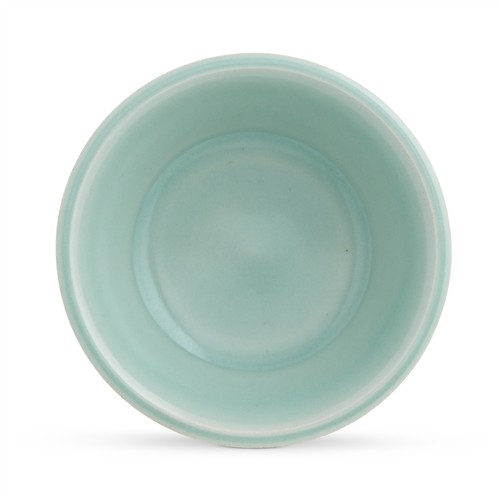
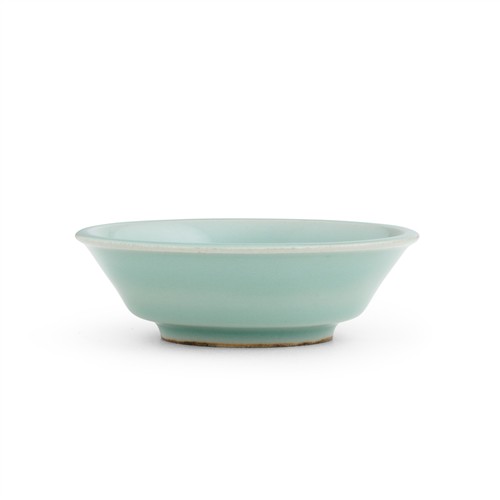
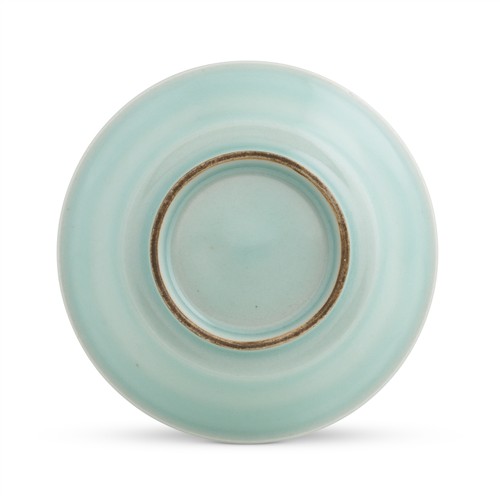
A VERY FINE CHINESE 'KINUTA' LONGQUAN CELADON WASHER, SOUTHERN SONG DYNASTY (1127 - 1279)
The washer is finely potted with an angular profile, rising from a short foot to a slightly everted rim, and is covered overall in an unctuous glaze of even bluish-green tone, save for the foot ring burnt orange in the firing.
The ethereal sky-blue colour and remarkably tactile, almost silken, surface of the glaze exemplify the finest ideals of celadon production. Generations of potters across various kilns sought to emulate such texture and colour, though it was seldom matched outside the imperial Ru and Guan kilns. Even among imperial Guan wares, considerable variations in tone are evident, with less successful examples discarded in kiln waste pits (see Select Ceramics from Laohudong Kiln Site in Hangzhou, Beijing, 2002, pp. 16, 24–25).
The refinement of Southern Song Longquan celadons was closely linked to the establishment of the Guan kilns after the Song court moved south to Hangzhou (see Zhu Boqian, ed., Celadons from Longquan Kilns, Taipei, 1998, p. 17). While Longquan kilns largely produced wares for prosperous commercial patrons, their finest output occasionally approached imperial standards. Southern Song examples are particularly admired for their thick, lustrous bluish-green glazes, the best of which are known in Japan by the term kinuta. Some scholars have further suggested that Longquan kilns may also have supplied wares directly to the court when required (see Rose Kerr, Song Dynasty Ceramics, London, 2004, p. 89). The present washer may be considered among this elite group.
Comparable examples include a pair of washers of this type in the MOA Museum of Art, Atami, illustrated in Song Ceramics, Tokyo, p. 108, no. 71; another in the Idemitsu Museum of Art, Tokyo, illustrated in Sensei, Bansei and Celadon of Longquan Yao, Izumi, 1996, p. 16, no. 48; and related examples excavated from the Jinyucun hoard, Suining, Sichuan, illustrated in Jinyucun Hoard of Southern Song Dynasty in Suining, vol. II, Beijing, 2012, pls. 62–64.
Auction comparables include a slightly larger kinuta-type washer sold at Christie's New York, 22 March 2019, lot 1742; further related examples sold at Christie's New York, 13 September 2019, lot 1045; Christie's Hong Kong, 30 May 2018, lot 3096; Christie's Hong Kong, 7 June 2022, lot 3114; and Sotheby's Hong Kong, 8 April 2023, lot 3516.
南宋 龍泉窯砧青瓷洗
本器釉色空靈澄澈,呈天青泛藍之調,釉面溫潤細膩,幾近絲絹質感,堪稱青瓷燒造之理想境界。歷代窯工雖競相追求此等釉色與質感,然除汝窯與官窯外,能臻其妙者殊為罕見。即使官窯器中,釉色亦多有差異,未達理想者往往棄置於窯址之中。
南宋遷都臨安後,龍泉窯受官窯審美與技術影響,燒造水準顯著提升。雖主要供應士紳與富裕階層,然其最精良之作,品質往往足以比肩御窯。南宋龍泉青瓷尤以釉層肥厚、光澤瑩潤、色呈青翠者最受推崇,日本收藏界稱之為「砧青瓷」(kinuta)。部分學者更認為,龍泉窯曾燒製高品質器物供奉宮廷,本洗或可列入此類佳器。
相類器可參見日本熱海MOA美術館藏一對同式洗,以及東京出光美術館藏例;四川遂寧金魚村南宋窖藏中亦出土同類器物。
拍賣可比案例包括:佳士得紐約2019年3月22日,拍品1742;佳士得香港2018年5月30日,拍品3096;佳士得香港2022年6月7日,拍品3114;以及蘇富比香港2023年4月8日,拍品3516。
11cm diameter; 2.8cm high
Unsold
Lot 219
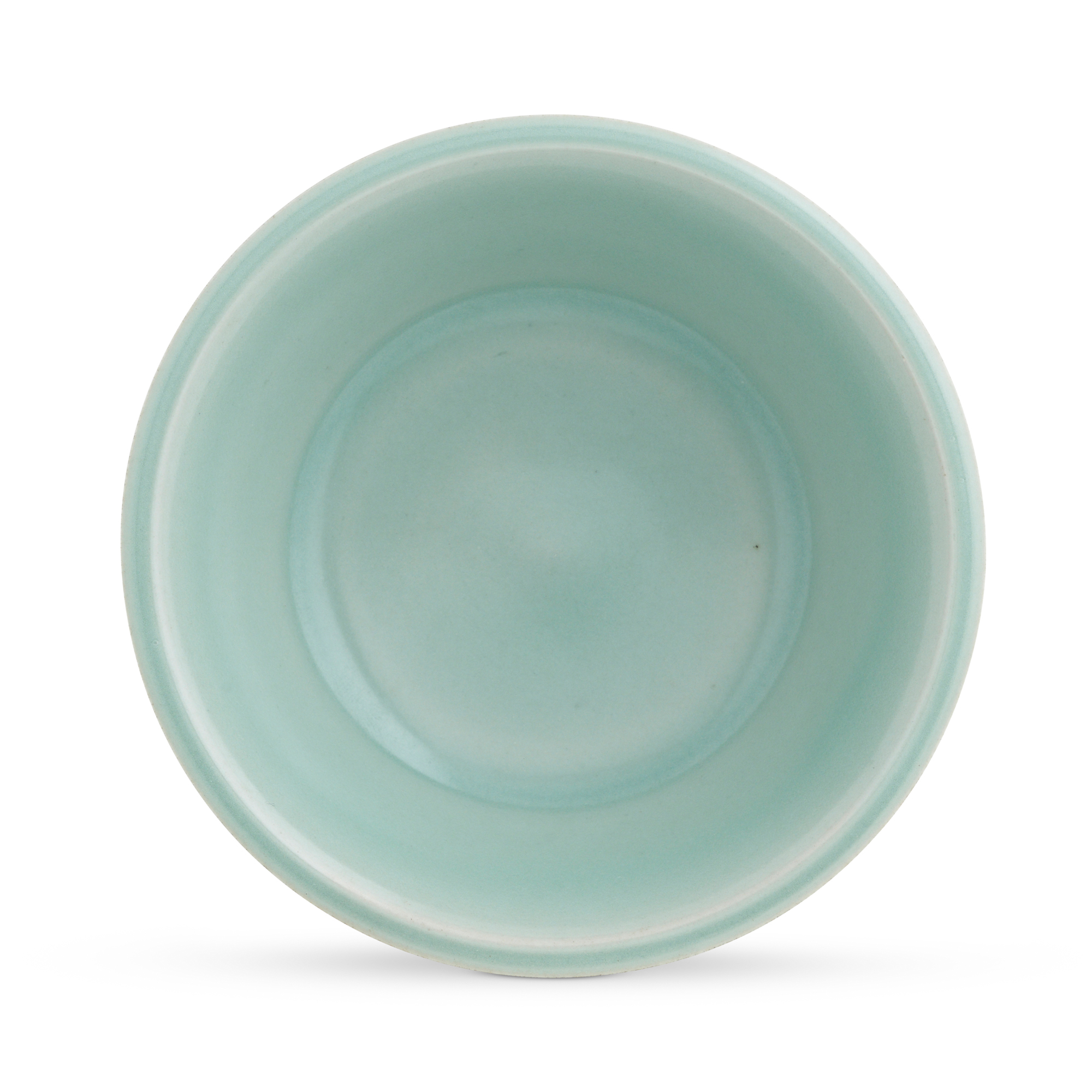
The washer is finely potted with an angular profile, rising from a short foot to a slightly everted rim, and is covered overall in an unctuous glaze of even bluish-green tone, save for the foot ring burnt orange in the firing.
The ethereal sky-blue colour and remarkably tactile, almost silken, surface of the glaze exemplify the finest ideals of celadon production. Generations of potters across various kilns sought to emulate such texture and colour, though it was seldom matched outside the imperial Ru and Guan kilns. Even among imperial Guan wares, considerable variations in tone are evident, with less successful examples discarded in kiln waste pits (see Select Ceramics from Laohudong Kiln Site in Hangzhou, Beijing, 2002, pp. 16, 24–25).
The refinement of Southern Song Longquan celadons was closely linked to the establishment of the Guan kilns after the Song court moved south to Hangzhou (see Zhu Boqian, ed., Celadons from Longquan Kilns, Taipei, 1998, p. 17). While Longquan kilns largely produced wares for prosperous commercial patrons, their finest output occasionally approached imperial standards. Southern Song examples are particularly admired for their thick, lustrous bluish-green glazes, the best of which are known in Japan by the term kinuta. Some scholars have further suggested that Longquan kilns may also have supplied wares directly to the court when required (see Rose Kerr, Song Dynasty Ceramics, London, 2004, p. 89). The present washer may be considered among this elite group.
Comparable examples include a pair of washers of this type in the MOA Museum of Art, Atami, illustrated in Song Ceramics, Tokyo, p. 108, no. 71; another in the Idemitsu Museum of Art, Tokyo, illustrated in Sensei, Bansei and Celadon of Longquan Yao, Izumi, 1996, p. 16, no. 48; and related examples excavated from the Jinyucun hoard, Suining, Sichuan, illustrated in Jinyucun Hoard of Southern Song Dynasty in Suining, vol. II, Beijing, 2012, pls. 62–64.
Auction comparables include a slightly larger kinuta-type washer sold at Christie's New York, 22 March 2019, lot 1742; further related examples sold at Christie's New York, 13 September 2019, lot 1045; Christie's Hong Kong, 30 May 2018, lot 3096; Christie's Hong Kong, 7 June 2022, lot 3114; and Sotheby's Hong Kong, 8 April 2023, lot 3516.
南宋 龍泉窯砧青瓷洗
本器釉色空靈澄澈,呈天青泛藍之調,釉面溫潤細膩,幾近絲絹質感,堪稱青瓷燒造之理想境界。歷代窯工雖競相追求此等釉色與質感,然除汝窯與官窯外,能臻其妙者殊為罕見。即使官窯器中,釉色亦多有差異,未達理想者往往棄置於窯址之中。
南宋遷都臨安後,龍泉窯受官窯審美與技術影響,燒造水準顯著提升。雖主要供應士紳與富裕階層,然其最精良之作,品質往往足以比肩御窯。南宋龍泉青瓷尤以釉層肥厚、光澤瑩潤、色呈青翠者最受推崇,日本收藏界稱之為「砧青瓷」(kinuta)。部分學者更認為,龍泉窯曾燒製高品質器物供奉宮廷,本洗或可列入此類佳器。
相類器可參見日本熱海MOA美術館藏一對同式洗,以及東京出光美術館藏例;四川遂寧金魚村南宋窖藏中亦出土同類器物。
拍賣可比案例包括:佳士得紐約2019年3月22日,拍品1742;佳士得香港2018年5月30日,拍品3096;佳士得香港2022年6月7日,拍品3114;以及蘇富比香港2023年4月8日,拍品3516。
11cm diameter; 2.8cm high
Estimate $10,000 - $20,000
Overall in good condition.
CLICK TO SEE DETAIL PHOTOS OF THE WHOLE AUCTION