Back
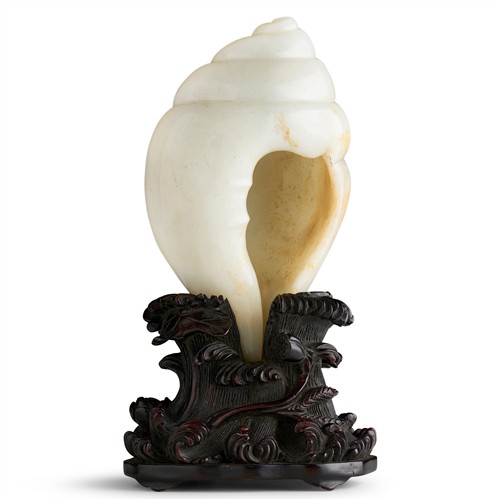
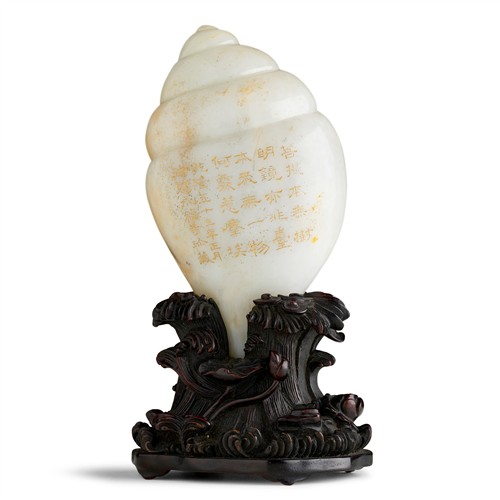
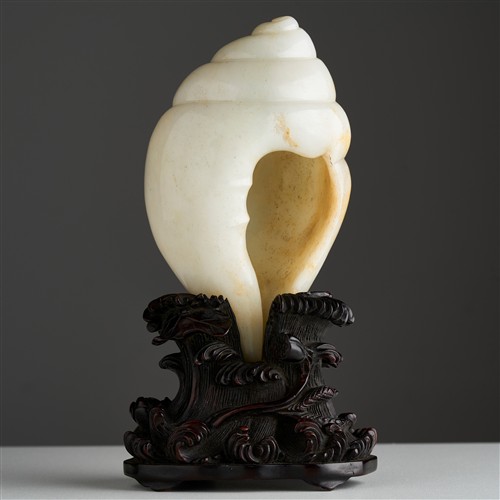
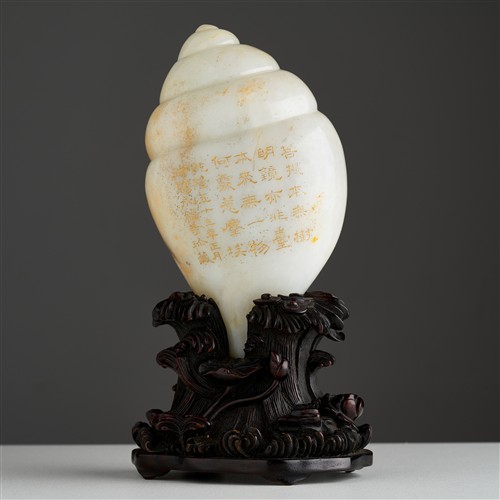
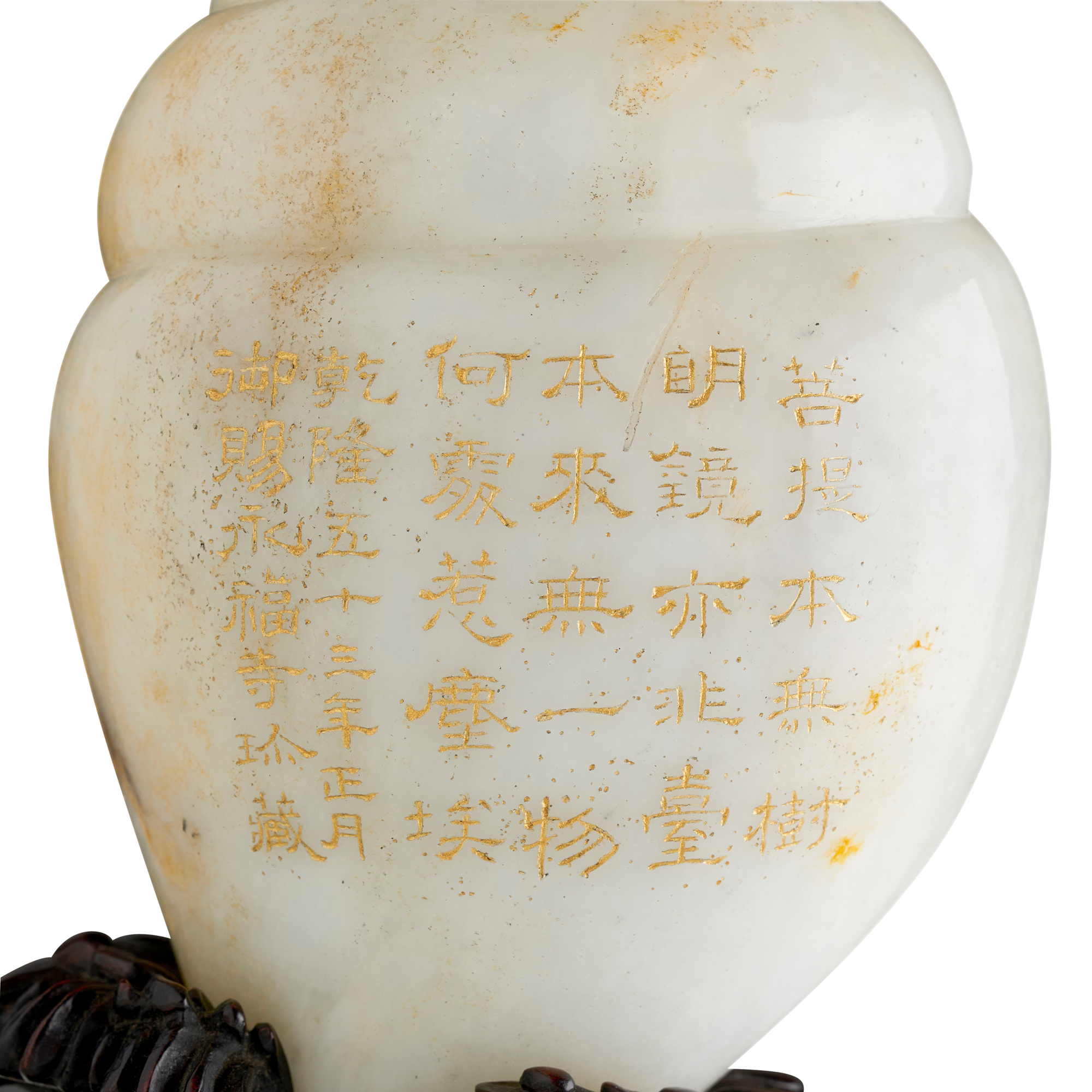
A CHINESE WHITE JADE CARVING OF A CONCH SHELL, QIANLONG MARK, QING DYNASTY (1644 - 1911)
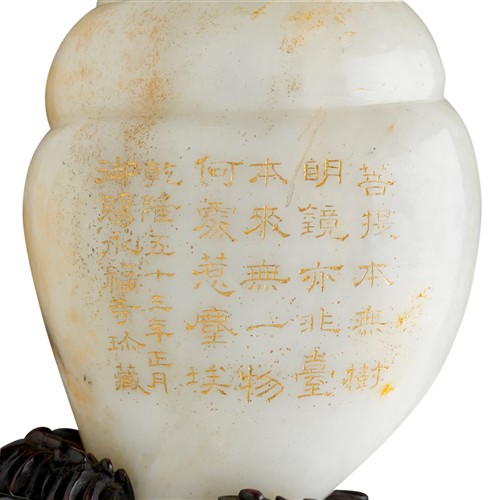
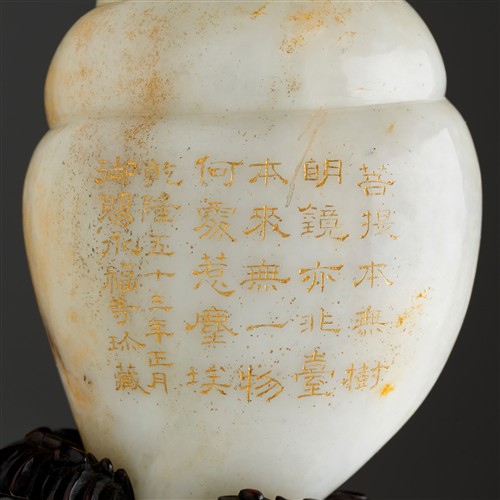
One side of the shell has finely inscribed in gold pigment with a Zen Buddhist poem: "Bodhi has no tree, the bright mirror is not a stand. Originally there is nothing; where can dust settle? The first month of the 53rd year of Qianlong, imperial gift to Yongfu temple."
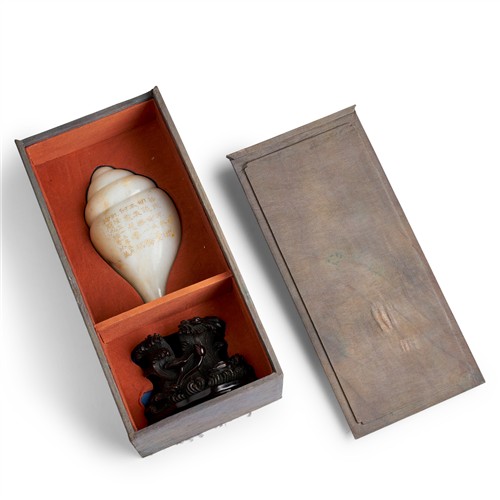
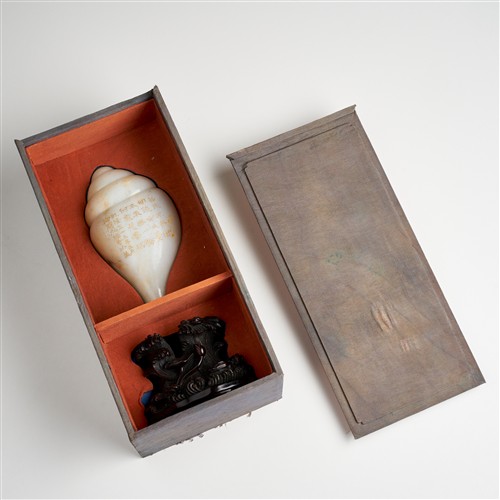
It's with a carved fitted Zitan stand and an old fitted box.
The present white jade carving in the form of a conch shell is exceptionally rare, if not unique. Conch shells (Sanskrit: sankha; Chinese: luo) are among the Eight Buddhist Emblems (bajixiang), symbolising the far-reaching sound of the Buddha's teachings and their transmission. Closely associated with Tibetan Buddhist ritual, such objects held particular significance at the Qing court, especially under the reigns of the emperors Kangxi and Qianlong, both devout adherents.
A number of real conch shells, often elaborately mounted or embellished, were commissioned by the court or presented by high lamas for ritual use. Examples are preserved in the National Palace Museum, Taipei, illustrated in Monarchy and Its Buddhist Way (1999), pp. 149–155, nos. 61–65. Jade carvings in this form are comparatively rare, as vessels of this type were not typically associated with the Confucian scholar's desk, reflecting instead a syncretic blending of literati and Buddhist traditions.
Compare a large white jade conch shell carved with the Eight Buddhist Emblems from the Shorenstein Collection, sold at Christie's Hong Kong, 1 December 2010, lot 2960.
清 乾隆款 白玉雕法螺 描金御題詩
一面以金彩細書禪宗偈語:「菩提本無樹,明鏡亦非臺。本來無一物,何處惹塵埃。乾隆五十三年正月賜永福寺。」
附雕紫檀木座及舊配盒。
白玉雕法螺形器極為罕見,幾近孤例。法螺(梵語 sankha,漢語螺)為佛教八吉祥之一,象徵佛法傳播之聲遠播四方,與藏傳佛教儀軌關係密切,尤受清代宮廷推崇,康熙及乾隆朝尤為崇奉。
清宮常見真螺加飾或鑲嵌製作,或由高僧進貢用於法事,相關例藏於台北故宮博物院,見《法界源流:清宮藏傳佛教文物特展》(1999年),頁149–155,編號61–65。玉雕螺形器存世極稀,因其形制並非常見於文人案頭器物,反映文人與佛教文化之融合。
可比較一件雕飾八吉祥紋之大型白玉法螺,出自 Shorenstein 收藏,售於香港佳士得,2010年12月1日,拍品2960。
Overall: 21.5cm; Jade: 16cm high;
Unsold
Lot 303
One side of the shell has finely inscribed in gold pigment with a Zen Buddhist poem: "Bodhi has no tree, the bright mirror is not a stand. Originally there is nothing; where can dust settle? The first month of the 53rd year of Qianlong, imperial gift to Yongfu temple."
It's with a carved fitted Zitan stand and an old fitted box.
The present white jade carving in the form of a conch shell is exceptionally rare, if not unique. Conch shells (Sanskrit: sankha; Chinese: luo) are among the Eight Buddhist Emblems (bajixiang), symbolising the far-reaching sound of the Buddha's teachings and their transmission. Closely associated with Tibetan Buddhist ritual, such objects held particular significance at the Qing court, especially under the reigns of the emperors Kangxi and Qianlong, both devout adherents.
A number of real conch shells, often elaborately mounted or embellished, were commissioned by the court or presented by high lamas for ritual use. Examples are preserved in the National Palace Museum, Taipei, illustrated in Monarchy and Its Buddhist Way (1999), pp. 149–155, nos. 61–65. Jade carvings in this form are comparatively rare, as vessels of this type were not typically associated with the Confucian scholar's desk, reflecting instead a syncretic blending of literati and Buddhist traditions.
Compare a large white jade conch shell carved with the Eight Buddhist Emblems from the Shorenstein Collection, sold at Christie's Hong Kong, 1 December 2010, lot 2960.
清 乾隆款 白玉雕法螺 描金御題詩
一面以金彩細書禪宗偈語:「菩提本無樹,明鏡亦非臺。本來無一物,何處惹塵埃。乾隆五十三年正月賜永福寺。」
附雕紫檀木座及舊配盒。
白玉雕法螺形器極為罕見,幾近孤例。法螺(梵語 sankha,漢語螺)為佛教八吉祥之一,象徵佛法傳播之聲遠播四方,與藏傳佛教儀軌關係密切,尤受清代宮廷推崇,康熙及乾隆朝尤為崇奉。
清宮常見真螺加飾或鑲嵌製作,或由高僧進貢用於法事,相關例藏於台北故宮博物院,見《法界源流:清宮藏傳佛教文物特展》(1999年),頁149–155,編號61–65。玉雕螺形器存世極稀,因其形制並非常見於文人案頭器物,反映文人與佛教文化之融合。
可比較一件雕飾八吉祥紋之大型白玉法螺,出自 Shorenstein 收藏,售於香港佳士得,2010年12月1日,拍品2960。
Overall: 21.5cm; Jade: 16cm high;
Estimate $15,000 - $25,000
Overall in good condition.
CLICK TO SEE DETAIL PHOTOS OF THE WHOLE AUCTION