Back
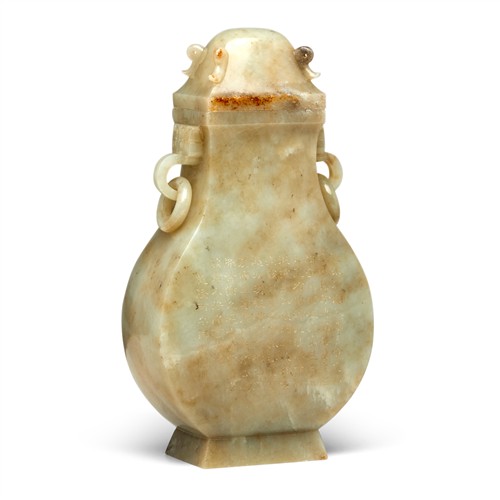
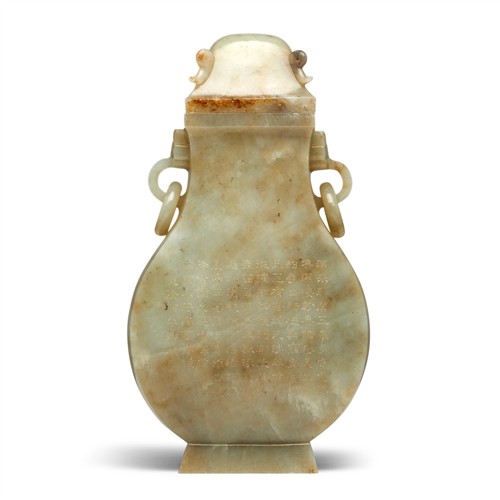
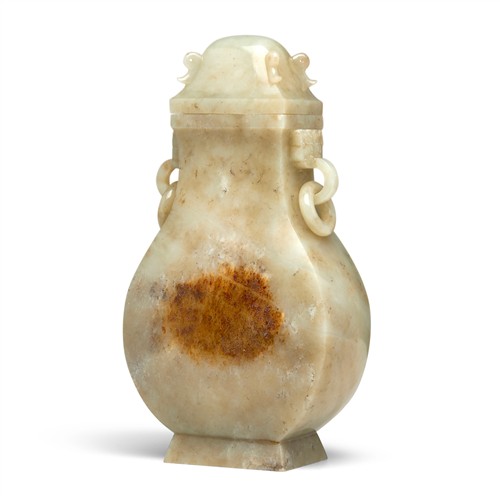
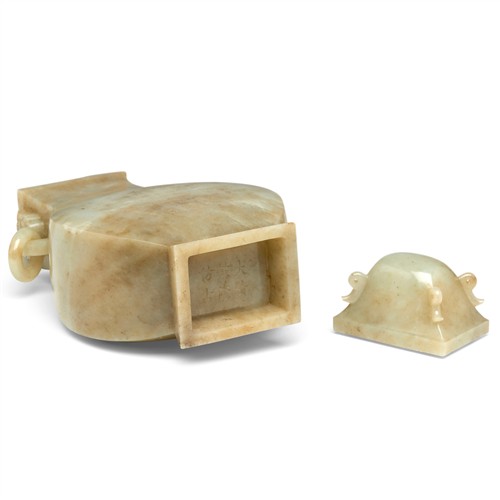
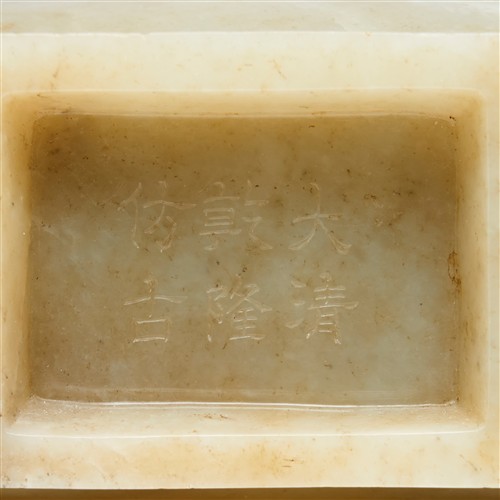
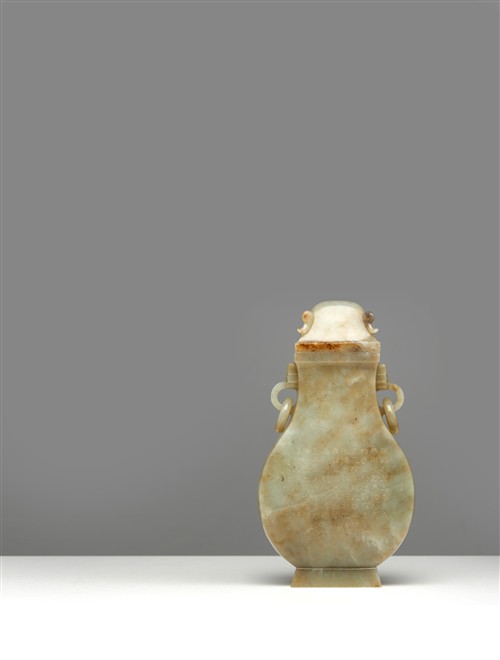
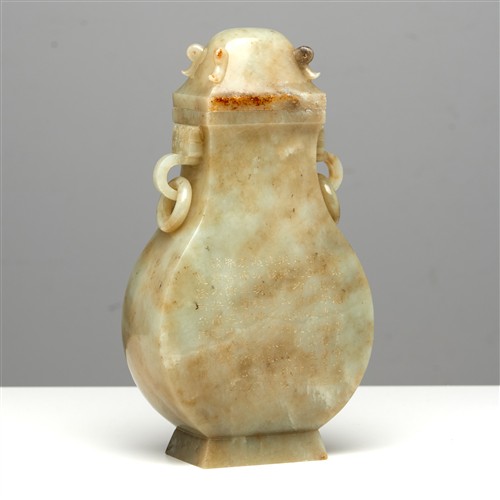
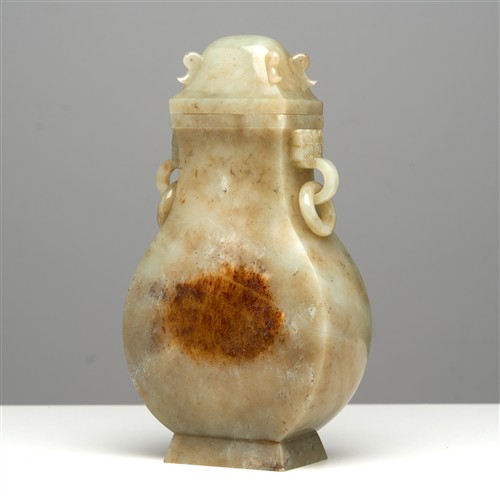
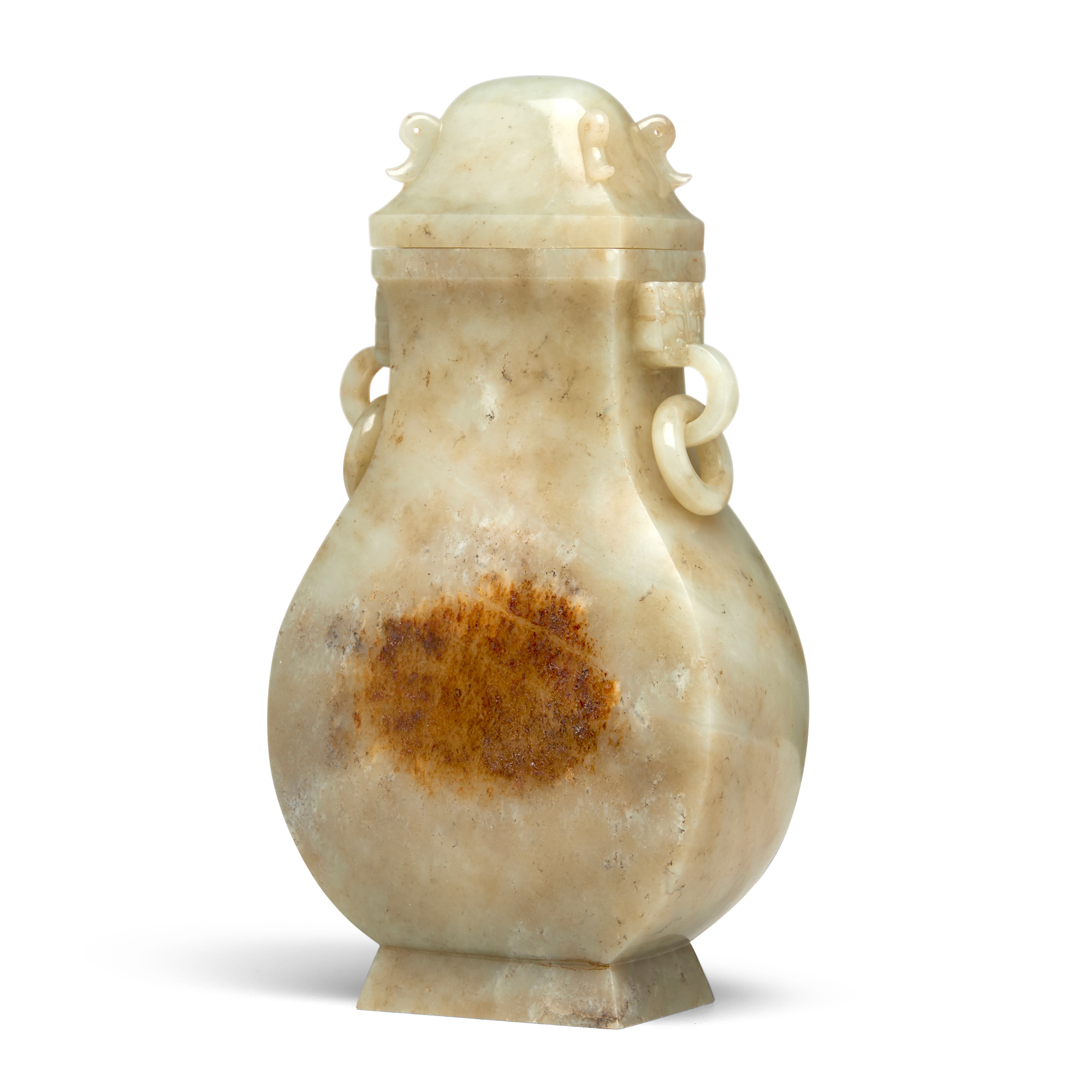
A LARGE WHITE JADE ARCHAISTIC FACETED VASE AND COVER, FANGHUAND, QIANLONG FANGGU SIX-CHARACTER INSCRIBED MARK, QING DYNASTY (1644 - 1911)
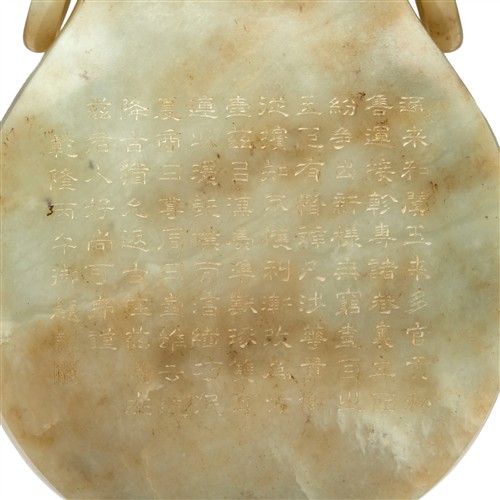
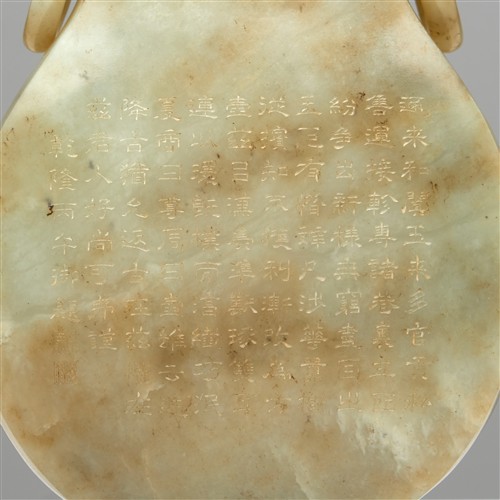
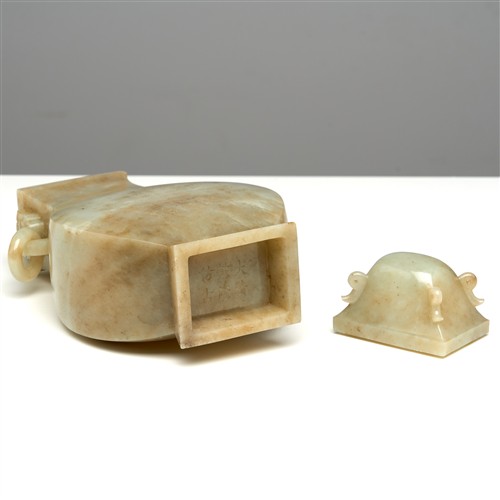
The exterior front of the vase is finely inscribed with a Qianlong imperial text, concluding with the inscription "Qianlong Bingwu Yuti" ("Imperial Inscription of the Qianlong Period, Bingwu Year [1786]"), and flanked by two Qianlong seal marks. The sides are plain, applied with a pair of taotie-mask handles suspending loose rings. The base bears a six-character inscription reading "Daqing Qianlong Fanggu" ("Made in archaic style during the Qianlong period of the Great Qing").
The three great emperors of China's Qing dynasty (1644-1911) - Kangxi, Yongzheng and Qianlong - were famous for their love of antiques. All three were active collectors and frequently commissioned wares made in ancient styles out of admiration for the golden eras of China's past, although it was likely the Qianlong emperor who had the strongest fascination with the antique. Archaistic wares produced during his reign included porcelains, bronzes, and as can be seen in the present lot, fine jades.
The shape of the present vase is based on bronze prototypes of Han dynasty (206 BC-220 AD) date. Compare two bronze fanghu of closely related form illustrated in The Complete Collection of Treasures of the Palace Museum - Bronze Articles for Daily Use, Hong Kong, 2006, pp. 68-9, nos. 59-60. Compare, also, the form of the Han dynasty bronze fanghu in this sale (lot 1259).
An inscribed Qianlong fanggu-marked jade fanghu with similar shape, is in the collection of the Palace Museum, Beijing, and is illustrated in Chinese Jades Throughout the Ages - Connoisseurship of Chinese Jades: Qing Dynasty - 12, Hong Kong, 1997, p. 85, pl. 42.
Another smaller jade fanghu see Christie's New York, 24 March 2011, lot 1522.
23.5 x 13cm
Sold for $8,000
Lot 269
The exterior front of the vase is finely inscribed with a Qianlong imperial text, concluding with the inscription "Qianlong Bingwu Yuti" ("Imperial Inscription of the Qianlong Period, Bingwu Year [1786]"), and flanked by two Qianlong seal marks. The sides are plain, applied with a pair of taotie-mask handles suspending loose rings. The base bears a six-character inscription reading "Daqing Qianlong Fanggu" ("Made in archaic style during the Qianlong period of the Great Qing").
The three great emperors of China's Qing dynasty (1644-1911) - Kangxi, Yongzheng and Qianlong - were famous for their love of antiques. All three were active collectors and frequently commissioned wares made in ancient styles out of admiration for the golden eras of China's past, although it was likely the Qianlong emperor who had the strongest fascination with the antique. Archaistic wares produced during his reign included porcelains, bronzes, and as can be seen in the present lot, fine jades.
The shape of the present vase is based on bronze prototypes of Han dynasty (206 BC-220 AD) date. Compare two bronze fanghu of closely related form illustrated in The Complete Collection of Treasures of the Palace Museum - Bronze Articles for Daily Use, Hong Kong, 2006, pp. 68-9, nos. 59-60. Compare, also, the form of the Han dynasty bronze fanghu in this sale (lot 1259).
An inscribed Qianlong fanggu-marked jade fanghu with similar shape, is in the collection of the Palace Museum, Beijing, and is illustrated in Chinese Jades Throughout the Ages - Connoisseurship of Chinese Jades: Qing Dynasty - 12, Hong Kong, 1997, p. 85, pl. 42.
Another smaller jade fanghu see Christie's New York, 24 March 2011, lot 1522.
23.5 x 13cm
Estimate $4,000 - $6,000
Overall in good condition.
CLICK TO SEE DETAIL PHOTOS OF THE WHOLE AUCTION