Lot 137
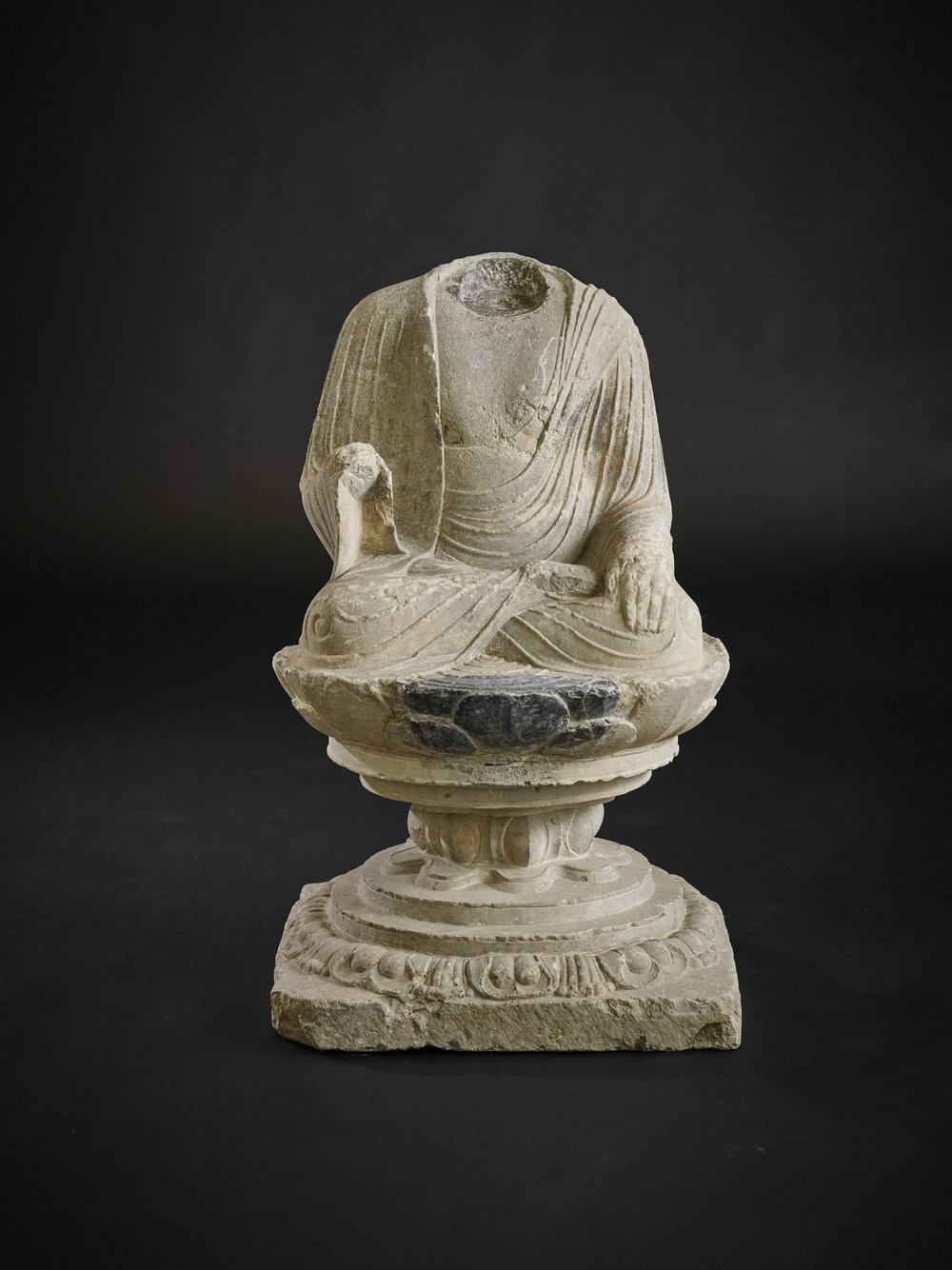
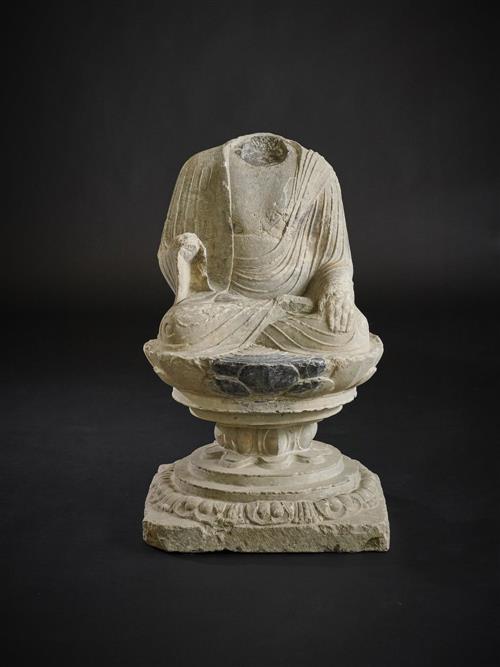
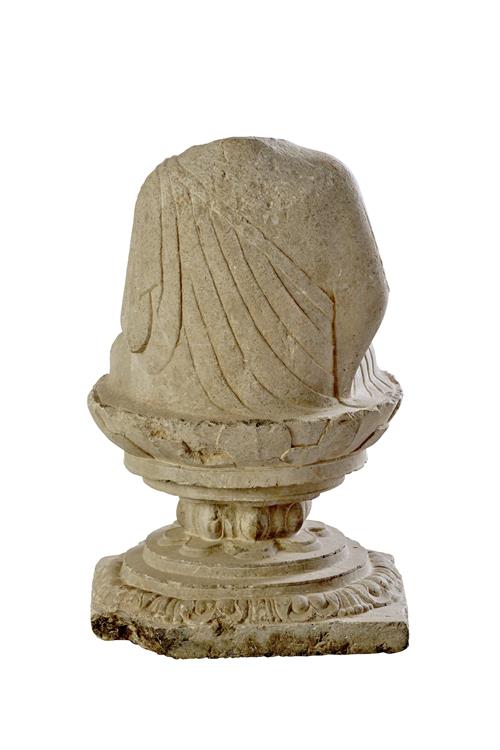
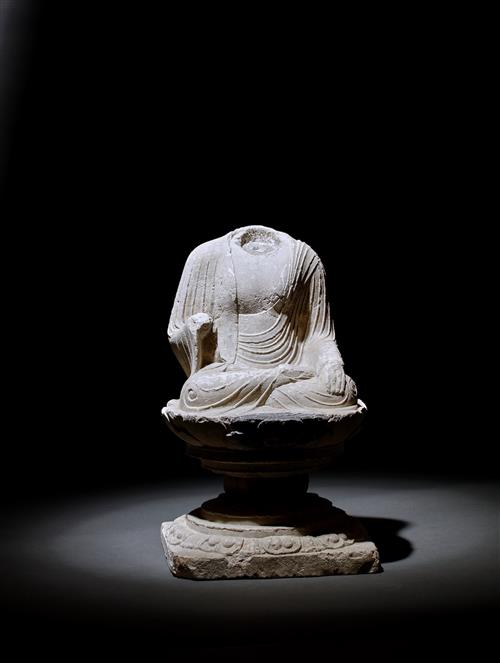
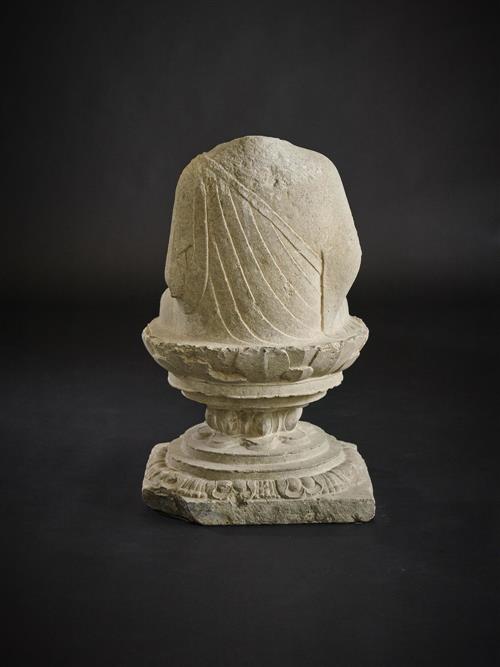
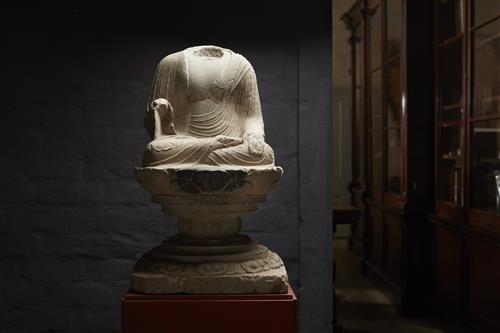
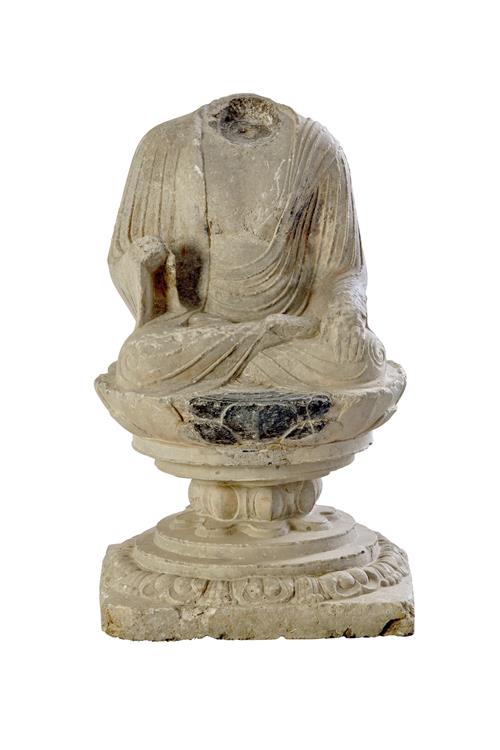
Tang Dynasty (618-907), seated in padmasana with right hand raised and left hand resting on the left knee, on the lotus throne, together with custom made wooden plinth.
Height 64cm, Width 34cm, Depth 37cm
Estimate $30,000 - $40,000
Losses and pitting overall, old darker stone repair to front.
The opinions expressed in the condition reports are a guide only and should not be treated as a statement of fact. Prospective buyers are encouraged to physically inspect item, or book a virtual viewing or request further images during our pre-sale period where Leonard Joel staff are available for advice.
Please note condition reports can be amended during the pre-sale period, so we strongly suggest any interested bidders check the published condition report available on the website before the auction commences. Leonard Joel makes no guarantee of the originality of mechanical or applied components. Absence of reference to such modifications does not imply that a lot is free from modifications.
Private collection, Italy
acquired from the above 3 March 2011
This sculpture in marble depicts Amitabha (the Buddha of Infinite Light), a celestial Buddha who created through his merit, a pure realm for his devotees to inhabit upon calling his name with sincerity. Amitabha is one of the most popular representations of Buddha throughout Asia, primarily due to his approachability and ease of worship for lay devotees.
The figure is carved with graceful, flowing lines to the diaphanous drapery and a plump fullness to the modelling of the limbs and torso. It is an excellent example of the sculpture of the 8th Century, the high-point of Tang Dynasty sculpture.
In the earlier dynasties, Chinese Buddhist sculpture had been more angular and heavily stylised, demonstrating a more ancient native influence, but in the Tang, probably spurred on by a renewed interest in seeking rare Buddhist scriptures from India, Buddhist sculpture took on a pronounced influence from Indian sculpture of the Gupta Period (early 4th to late 6th Century). The sculpture of the Gupta Period was highly influential on both Buddhist and Hindu sculpture throughout Asia, including Southeast Asia, the Korean peninsula, Japan and China, as India was the centre of Buddhist learning, being the birthplace of Buddhism.
Gupta sculpture is known for its generous, rounded modelling, graceful curves, and naturalism. It inherited the tradition of naturalistic Classical and Hellenistic sculpture brought to the region by Alexander the Great (356–323BC), via the sculptural traditions of the Kushan Empire of India and the Ancient Region of Gandhara. It was in Kushan that representational Buddhist sculpture was first born and developed during the 1st to 3rd Centuries. This marble figure of Buddha is therefore a clear descendant of the Greek sculptural tradition and represents the birth of naturalism in Chinese sculpture.
Carl Wantrup | Asian Art Consultant
The Brans Collection
AUCTION
Sale: LJ8444
4:00pm - 21 November 2021
36-40 Queen Street, Woollahra
VIEWING
Viewing in Sydney:
Friday 19 - Saturday 20 November, 10am - 4pm
Sunday 21 November, 10am - 3pm
CONTACT
Madeleine Norton
madeleine.norton@leonardjoel.com.au
SIMILAR ITEMS
Lot 176
*AN ITALIAN ORMOLU-MOUNTED EBONY, ROSEWOOD AND PIETRA DURA INLAID CABINET *CITES permit required for export
Estimate: $200,000-300,000
Lot 34
*A LARGE AUSTRALIAN COLONIAL CEDAR AND ROSE MAHOGANY BREAKFRONT BOOKCASE FOR THE MITCHELL LIBRARY This item is located in Perth, WA...
Estimate: $60,000-80,000
Lot 205
A LIFE-SIZE BRONZE OF THE DRUNKEN SATYR
Estimate: $30,000-50,000
Lot 201
THE MADONNA AND CHILD WITH SAINT JOHN IN A LANDSCAPE IN THE MANNER OF COSIMO ROSSELLI
Estimate: $30,000-40,000