
Lot 24
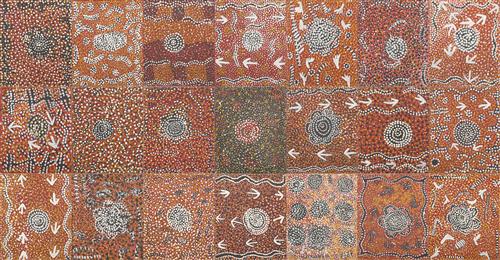
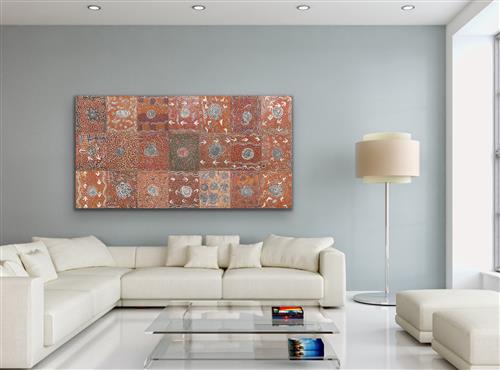
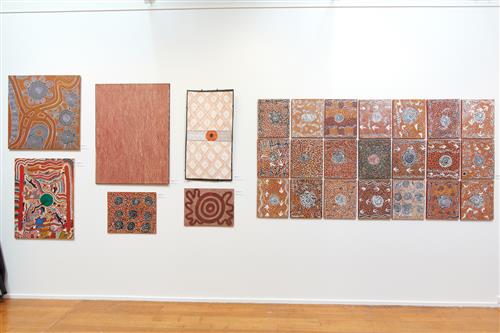
A Suite of Paintings Depicting the Sites of Kalipinypa and Tjikari 1994-95
synthetic polymer paint on linen (21)
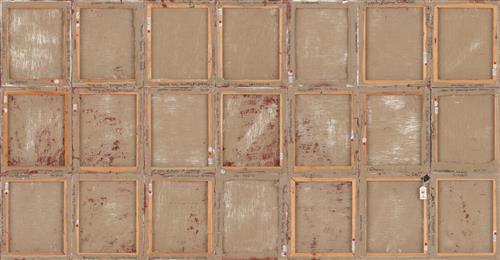
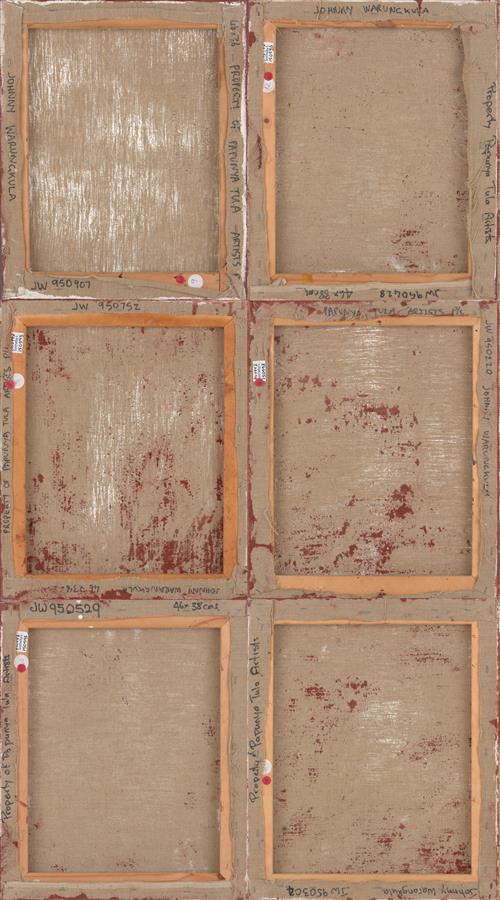
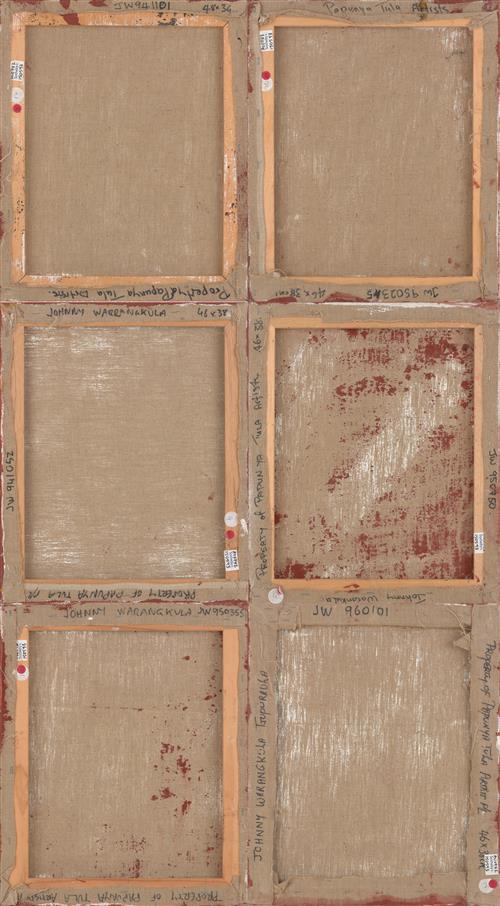
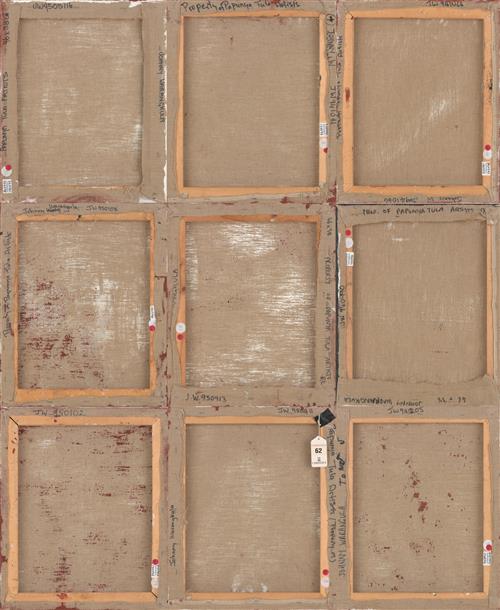
each inscribed verso with artist's name and respective Papunya Tula Artists cat. no.
138 x 266cm (overall) 46 x 38cm (each)
Estimate $30,000 - $40,000
Papunya Tula Artists, Alice Springs
The Estate of Ken Hutchison, Melbourne
Johnny Warangkula Tjupurrula rapidly distinguished himself as one of the most respected and influential artists of the Papunya Tula movement. Born in the Western Desert at Minjilpirri, a station northwest of Illipili and south of Lake Mackay, Tjupurrula relocated with his family to Haasts Bluff early in his life in response to the devastating droughts. He eventually settled permanently in Papunya Tula, a newly established government settlement 200km east of Haasts Bluff.
In 1994, Tjupurrula commenced a series of paintings depicting ancestral stories connected to the sites of Kalipinypa and Tjikari, both of which are positioned northeast of Sandy Blight junction and some 400km west of Alice Springs. The narrative that forms the basis of this piece and many other works from his career, concerns Winpa, the Lightning Boss, who sang up a huge storm from Kalipinya. Dark clouds formed, thunder cracked, hail pelted down and torrential rain scoured the earth. Winpa sang and stamped out the verses that Tjupurrula learned as a young man. Winpa propelled the storm eastward, creating a series of water holes, which now marks the path of his song line. (1) Observed from the centre outwards, the eye of the storm stands prominent in this piece, paying homage to the iconography from the story of Winpa and other ancestral elements from Tjupurrula's country.
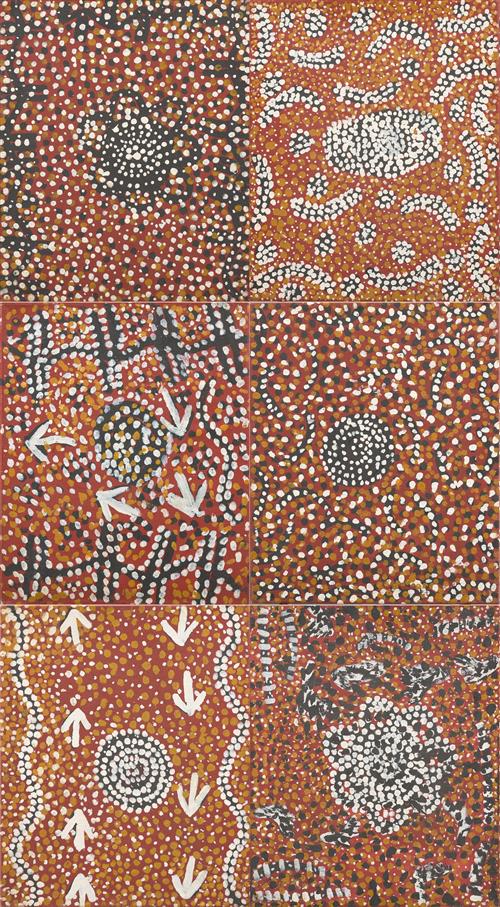
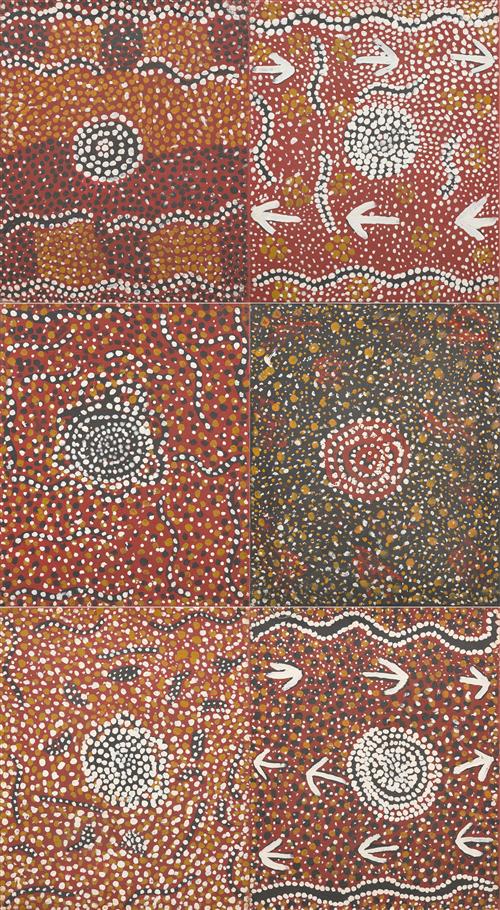
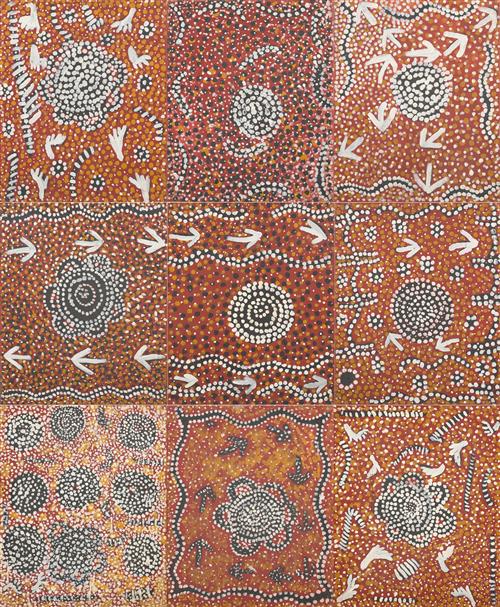
This work depicting the sites of Kalipinypa and Tjikari are characterised by twenty-one small canvases, all individually completed creating an atmospheric effect of a storm unfolding, alluding to the landscape where his ancestral story of Winpa occurs. Tjupurrula uses rich washes of paint applied directly onto the wet canvas, enabling the pigments to appear as though they have engrained themselves into the surface. Upon this earthy texture, dark winding lines, strokes and circles create movement and a energy behind each veil of dotted clusters or 'tremulous illusions' as referred to by Geoffrey Bardon. In works such as this and many from his career as an artist, Tjupurrula creates an intense pictorial surface evoking a sense of mystery, consistent with use of dotting across most early Papunya Tula works.
Lucy Foster | Senior Art Specialist
(1) Kean, J., Johnny Warankula Tjupurrula: Painting in a changing landscape NGV, ngv.vic.gov.au, retrieved 12 July 2022
Indigenous Art
AUCTION
Sale: LJ8647
6:00pm - 22 August 2022
333 Malvern Rd, South Yarra 3141
VIEWING
Friday 19 - Sunday 21 August, 10am - 4pm
333 Malvern Road, South Yarra VIC
CONTACT
Lucy Foster
lucy.foster@leonardjoel.com.au
SIMILAR ITEMS
Lot 14
BILL WHISKEY TJAPALTJARRI (c.1920-2008) (Pitjantjatjara Language Group) Rockholes Near The Olgas 2006 synthetic polymer paint on Bel...
Estimate: $20,000-30,000
Lot 15
NYAPANYAPA YUNUPINGU (1943-2021) (Gumatj Language Group) Untitled (Yidaki) natural earth pigments and wood
Estimate: $10,000-15,000
Lot 61
FREDDIE TIMMS (c.1946-2017) (Gija Language Group) Pipe Creek 1999 natural earth pigments on linen
Estimate: $10,000-15,000
Lot 23
ANATJARI TJAKAMARRA (c.1938-1992) (Pintupi Language Group) Kuniya Kutjarra (Two Sandhill Pythons) c.1980 synthetic polymer paint on...
Estimate: $9,000-12,000