Lot 146
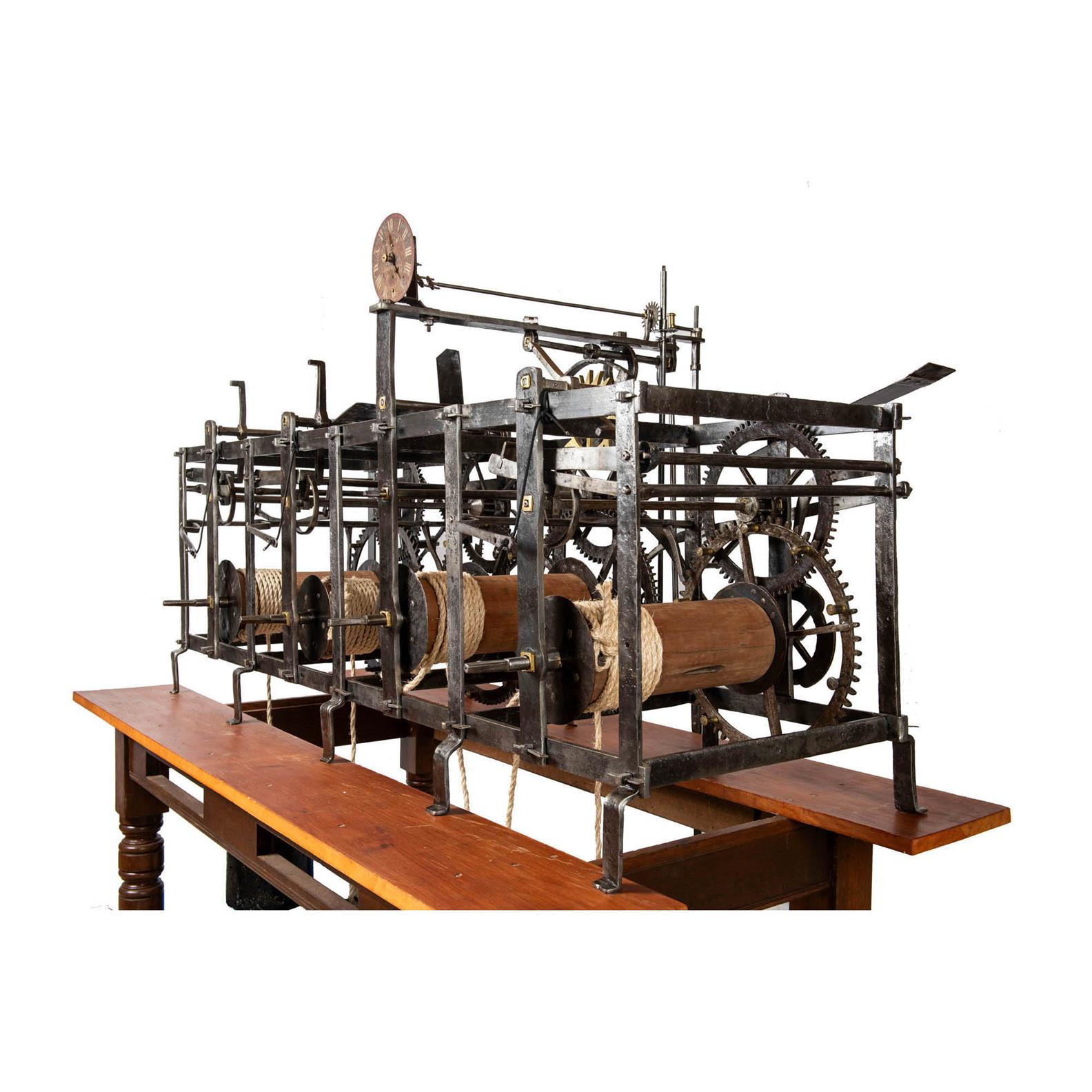
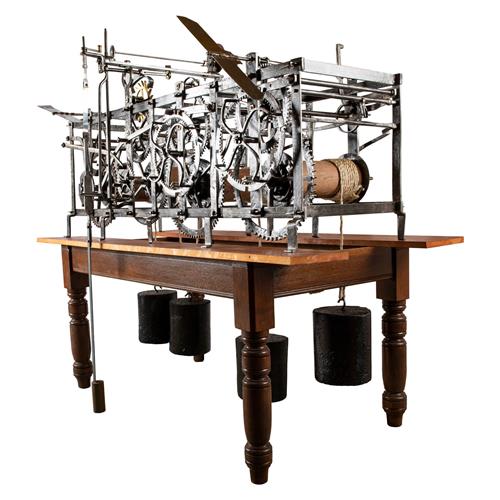
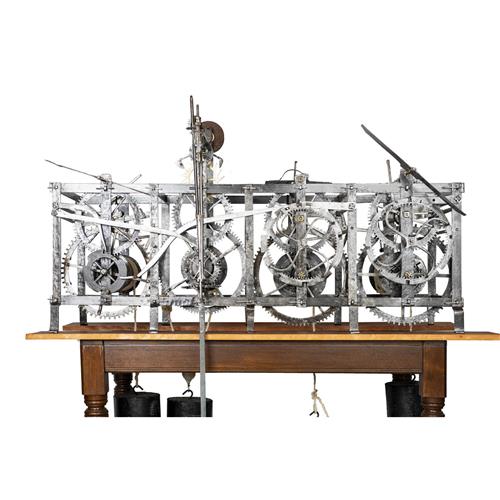
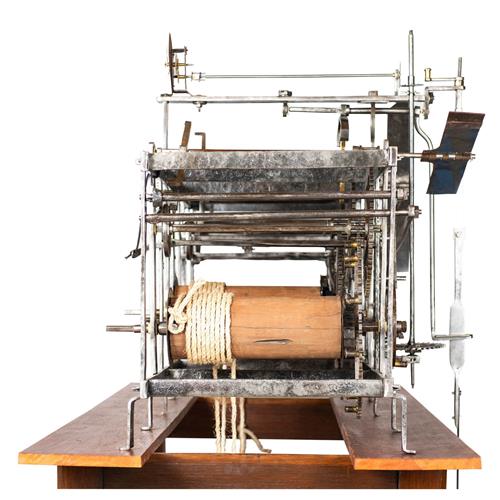
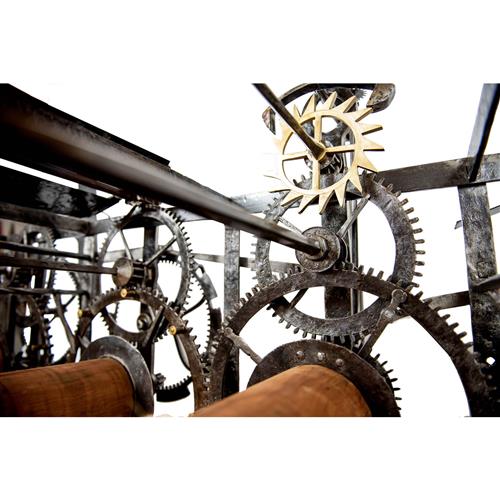
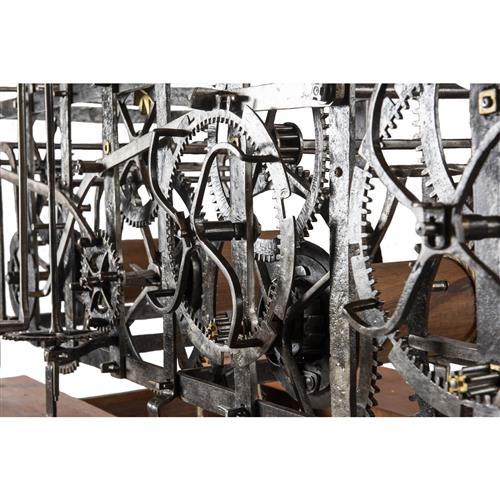
Probably Austria, c.1760-1810, the four gear train movement with quarter hour mechanism and chiming on the hour, with iron dial set with Roman numerals, pendulum rod and concrete weights, stamped with a bear to the frame and pendulum rod and two crossed hammers with the letters JPE.
Viewing by appointment only in Burradoo, NSW 2576.
Length: 164cm, Height 90cm, Depth 83cm, Weight approximately 250kg
Estimate $15,000 - $20,000
*PLEASE NOTE - THIS LOT IS NOT AVAILABLE FOR VIEWING AT LEONARD JOEL, VIEWING IS BY APPOINTMENT ONLY IN BURRADOO, NSW 2576*
- The Tower clock movement has been restored to working order however, the time keeping will only be accurate if the original 2.5 metre long pendulum is fitted and it is regulated.
- Earlier signs of renovation carried out in 1923 in Europe
- The name of the clockmaker - on the small inside dial - no longer legible
The opinions expressed in the condition reports are a guide only and should not be treated as a statement of fact. Prospective buyers are encouraged to seek further information or request additional images during our pre-sale period where Leonard Joel staff are available for advice. Please note condition reports can be amended during the pre-sale period, so we strongly suggest any interested bidders check the published condition report available on the website before the auction commences. Leonard Joel makes no guarantee of the originality of mechanical or applied components. Absence of reference to such modifications does not imply that a lot is free from modifications.
Helmut & Herta Nagy (The Spinning Wheel), Sydney, c.1970
Nadja Zoffmann, by descent
Matthew Munn (Sydney Clock Company), Sydney, 2021
Commissioned research by the British Horological Institute's Museum of Time Keeping has dated the clock's creation to 1760-1810, probably in Austria. At that time, the Industrial Revolution was generating high demand for clocks, and skilled European craftsmen were developing new technologies and techniques to produce high-quality mechanical timepieces for a growing market.
The clock would originally have been set high in a tower (or turret) with a 2.5-metre pendulum swinging beneath. Pre-dating wristwatches, it played an important role in regulating the lives of all within hearing distance by chiming each quarter hour. A failsafe mechanism repeated the bells that marked the hour.
The clock was wound each day with a crank handle. A small dial allowed the clock winder to check what time the large, external clock face was showing.
The Collector's Auction
AUCTION
Sale: LJ8715
2:00pm - 5 March 2024
36-40 Queen Street, Woollahra
VIEWING
Friday 1 - Sunday 3 March, 10am - 4pm
36-40 Queen Street, Woollahra NSW
CONTACT
Madeleine Norton
sydney@leonardjoel.com.au
SIMILAR ITEMS
Lot 44
ARTHUR GEORGE WALKER RA (English, 1861-1939) Peleus and Thetis: The Spurned Embrace 1911 marble, on rotating pedestal Height 117cm
Estimate: $80,000-120,000
Lot 11
NORMAN LINDSAY (1879-1969) Rita in Lace Mantilla oil on canvas 60 x 46cm (framed 80 x 67cm)
Estimate: $35,000-55,000
Lot 6
NORMAN LINDSAY (1879-1969) Water Lilies 1930 watercolour on paper 58 x 44cm (framed 100 x 86cm)
Estimate: $20,000-30,000
Lot 26
NORMAN LINDSAY (1879-1969) Wind and the Furies c.1930 watercolour on paper 57.5 x 44cm (85 x 70cm framed)
Estimate: $20,000-30,000