Lot 9
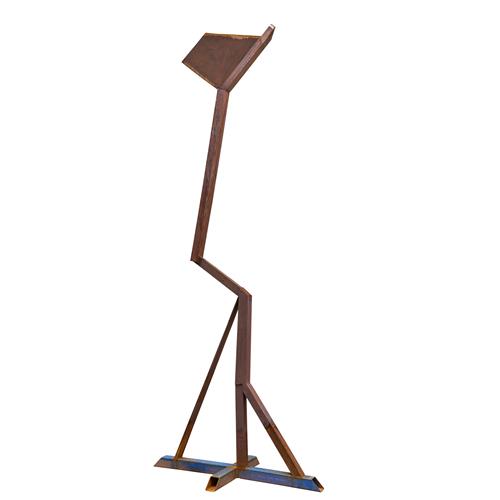
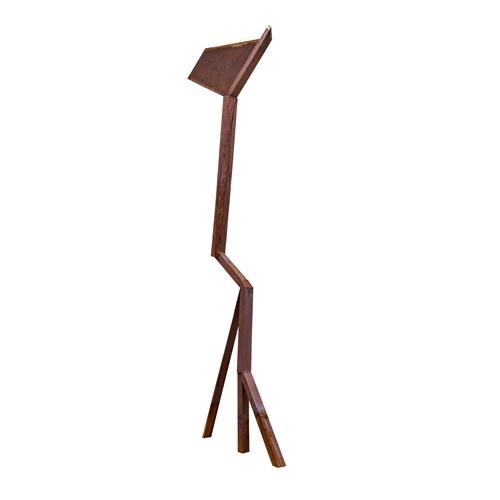
Emblems 1973
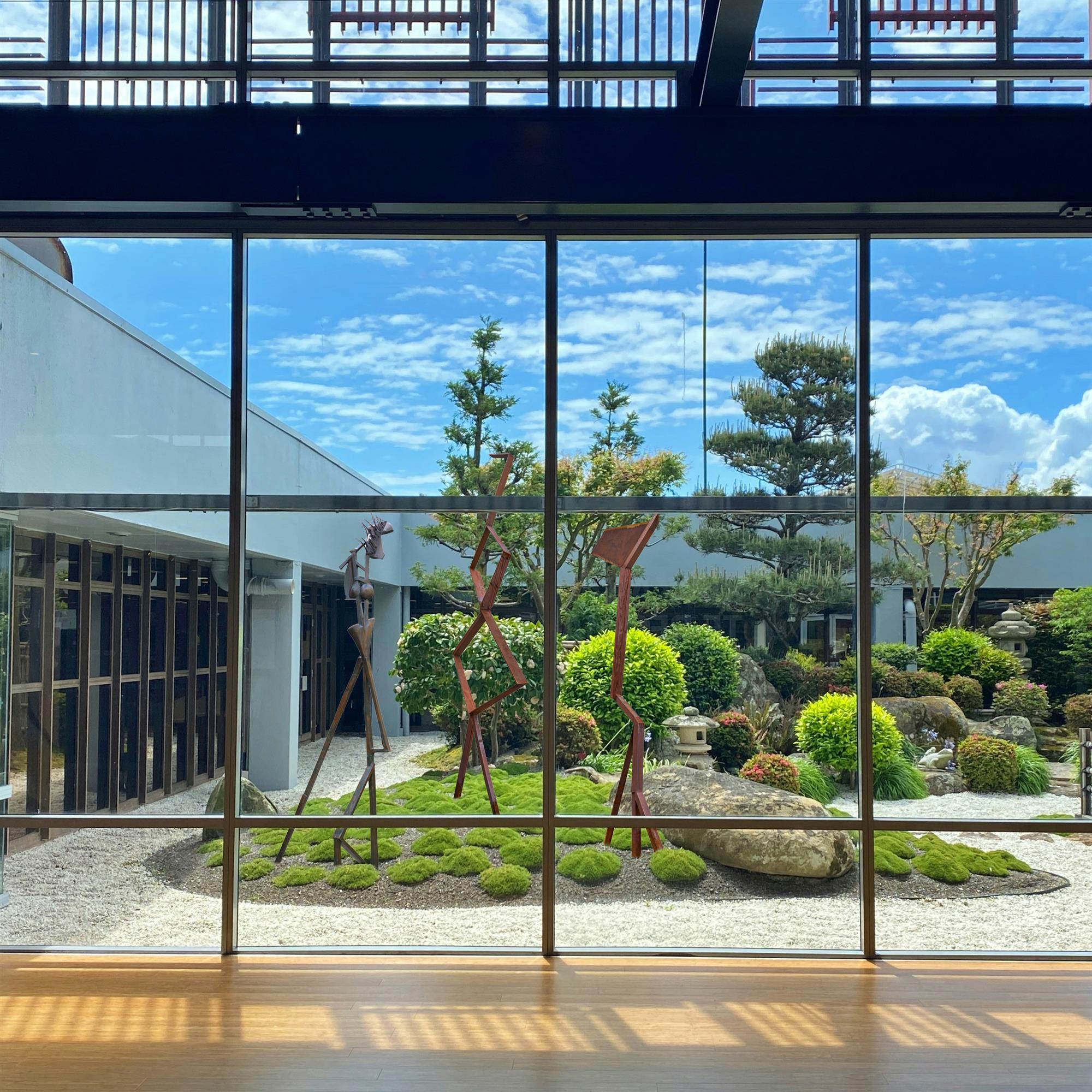
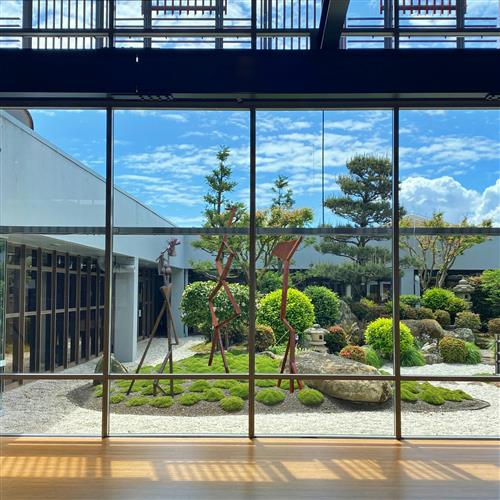
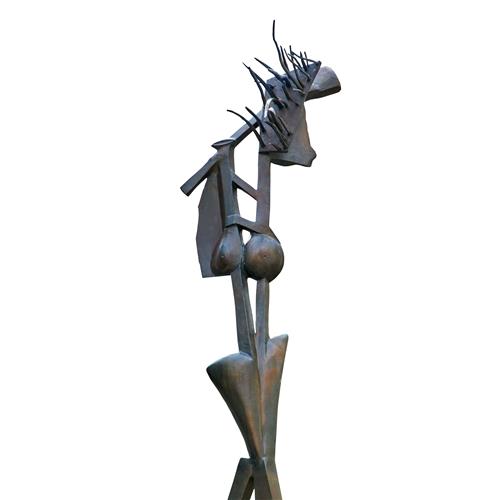
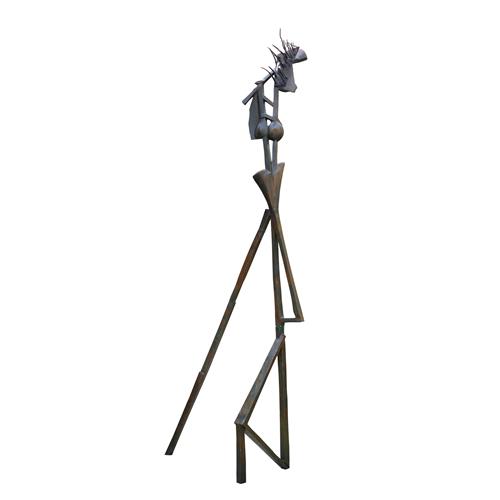
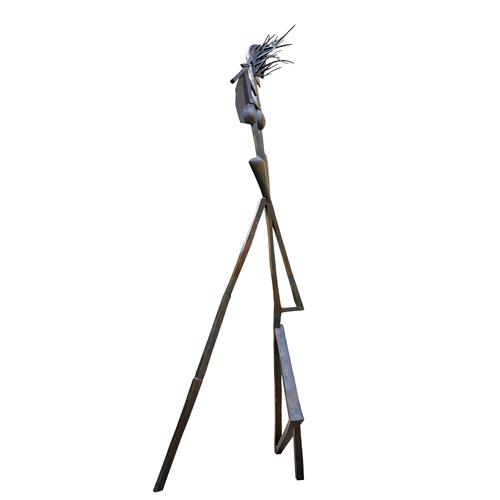
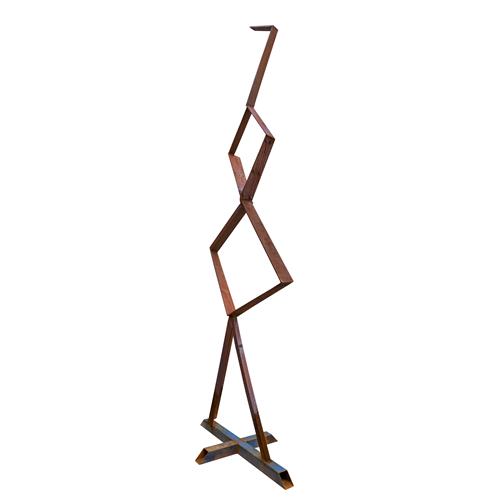
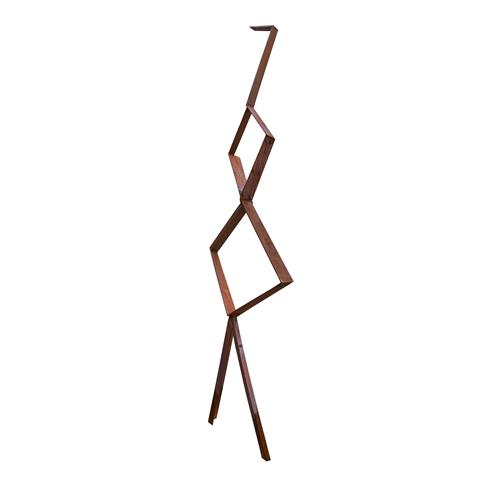
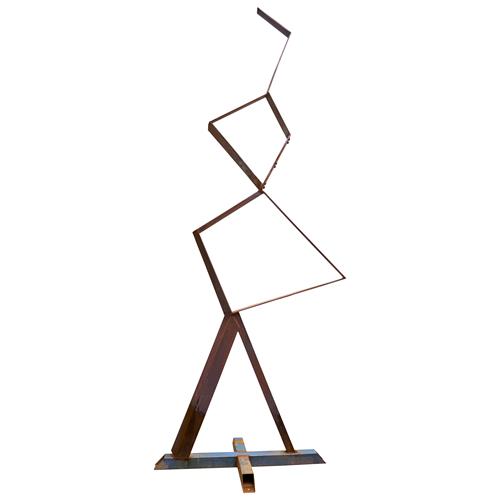
Emblem I, Emblem II, Emblem III
i. cast bronze
ii. rusted steel
iii. rusted steel
480cm height (largest); size variable
Estimate $100,000 - $150,000
The Artist
The Collection of Marianne Baillieu, Melbourne
Private collection, Melbourne
Thence by descent
Realities Sculpture Survey, Como House, South Yarra, 27 October - 27 November, 1973
Exhibited in the entrance garden of Realities Gallery, Melbourne, November 1973 - 1978
Lindsay R. and Holloway J., George Baldessin, National Gallery of Australia, Melbourne, 1983, cat. no. 122, pp. 132, 133 (illus.)
RELATED WORK
'The World of Tinsel' 1966, etching and aquatint, 50.2 x 30.5cm, in the collection of the National Gallery of Australia, Melbourne, illustrated in Lindsay R. and Holloway J., George Baldessin, National Gallery of Australia, Melbourne, 1983, cat. no. 36, pp. 58, 61
When George Baldessin was killed in a single vehicle accident on 9 August 1978, there was a sense of shock and a realisation that Australia had lost one of its most significant sculptors and printmakers. He died at the age of thirty-nine.
Emblem I, Emblem II and Emblem III, 1973, are three of Baldessin's monumental bronze and steel sculptures that are amongst his largest, most ambitious, yet least well-known major sculptures. They were collectively exhibited as Emblems in 1973, in the grounds of Como House, South Yarra, as part of the Realities Sculpture Survey exhibition. It was an impressive exhibition that also included the work of Jock Clutterbuck, Robert Klippel, Ron Robertson-Swann, Inge King, Herbert Flugelman, Reg Parker, Lenton Parr, Karl Duldig, Norma Redpath and Clement Meadmore. (1) The art critic for The Bulletin, singled out Baldessin's work for special praise, observing "the lofty, ambitious art of George Baldessin's bronze and steel Emblems standing like illusionary spirit figures, half tree, half human, alongside a cypress grove."(2)
Emblems was acquired by the director of the Realities gallery, Marianne Baillieu. When in 1975 she moved her gallery into a cluster of historic buildings in Jackson Street, Toorak, these Baldessin's sculptures in bronze and rusted steel were sited at the entrance of her gallery and remained there until the artist's death in 1978. After this, Emblems has been in a private collection and not widely known to the general public.
Baldessin was a maverick and somewhat enigmatic figure in the Australian art scene. He was born in 1939 at San Biagio di Callalta, Italy, to Italian parents. His mother was already a naturalised Australian and returned to Australia shortly after his birth with the plan that father and son were to follow shortly when the paperwork was completed. The war intervened and George Baldessin was not reunited with his mother for another nine years. In Australia, he was brought up in the Italian migrant enclave in Drummond Street, in suburban Carlton, near the Melbourne General Cemetery, and went to Catholic primary and secondary schools, where he was an outstanding student.
In 1958, Baldessin enrolled at the art school at the Melbourne Technical College, as RMIT was then called, and reinvented his identity claiming to be locally born and one of the local boys. Few knew his true identity that was only revealed to all at his funeral. At art school, he was drawn to sculpture and printmaking and excelled in both and was promoted by his teachers, Lenton Parr and Tate Adams. Baldessin was viewed as a brilliant emerging artist and on graduating in 1961, he went on to further his studies in Europe, first in London, at the Chelsea School of Art, a place that Fred Williams had recommended to him. Subsequently, he studied in Milan (where he had free accommodation with an uncle), at the Brera Academy where he worked under the luminaries Marino Marini and Alik Cavaliere.
When his early etchings and sculptures were exhibited at the Rudy Komon Gallery in Sydney in 1965, the art critic and artist Elwyn Lynn observed, "George Baldessin's first Sydney exhibition … is an extraordinary event, equalled, among the young, only by the first full view of Brett Whiteley. The risks he takes and enjoys sprint from Melbourne's imaginative realism and irrational fantasy …"(3) Virtually all of the other art critics were equally stunned by Baldessin's early exhibitions and the artist Jan Senbergs summed up the mood well when he wrote, "anyone who was there at the time realised they were witnessing the emergence of a major talent who was going to make a definite mark on the Australian scene". (4)
Baldessin's art belongs to post-war existentialist figuration that frequently involves radical biomorphic anatomical dislocations. His imagery flows freely between his sculptures and etchings and in some of his major installations he would combine prints with sculptures. The term 'emblems' first appears in Baldessin's etchings in about 1972 (5) and was quickly transferred into the monumental Emblems sculpture the following year. The theme of emblems continues in Baldessin's art through to his death in 1978. The imagery in the emblems series relates closely to that encountered in his etchings and sculptures from the 1960s and relates to the abstracted, slightly surreal creations that he brought back to Australia after his work with Marini and Cavaliere. In his series of emblems work, this imagery is further abstracted and raised as if on flagpoles as entities around which people can rally.
Emblems, 1973, consists of three physically separate but conceptually intimately interrelated sculptures. Emblem I is of one of Baldessin's biomorphic female entities that has been cast in bronze and hoisted in the air on a bronze support. Parallels may be drawn with a number of etchings, including The world of tinsel, 1966, (6) with their distressed female forms. Emblem II and Emblem III not only engage with a different material, rusted steel, but are also more abstracted with no concession to figurative forms. This juxtapositioning of the figurative with the non-figurative elements was typical of Baldessin's art at the time and appears in such etchings as Performance, 1971 (one of the artist's most famous prints), and Emblems, 1972. (7) This could be interpreted as a classic existentialist exploration of presence and absence - of being and nothingness - in Jean-Paul Sartre's classic turn of phrase, "man is the being through whom nothingness comes into the world."(8)
Baldessin made few pronouncements concerning how to interpret his art, however, an observation he once made in a letter to a curator may help us to arrive at one possible reading of this sculpture. Baldessin wrote, "I'm interested in the human figure as a vehicle for expression - what am I trying to express? - I think human weakness through the vulnerable figure without extracting its dignity no matter how uncertain … this is why distortion and the element of drama is ever present."(9) Baldessin's Emblems, 1973, is a spectacular celebration of the vulnerability of the human figure and its ambiguous existence.
Emeritus Professor Sasha Grishin AM, FAHA
Australian National University
(1) Realities sculpture survey, 1973, catalogue
(2) 'Art', The Bulletin, November 17, 1973, p.51
(3) Elwyn Lynn, "Triumphant first show", The Australian, November 12-13, 1965
(4) Sasha Grishin, Baldessin/Whitely: Parallel visions, Melbourne, National Gallery of Victoria, 2018, p.18
(5) George Baldessin, Emblems, 1972, etching, aquatint and colour stencil, 45.9 x 41cm, NGA see https://www.printsandprintmaking.gov.au/works/37379/images/11701/ and George Baldessin, Personage and Emblems, 1972, colour etching and aquatint on two sheets of paper, 101.0 x 101.0 cm, edition of 10, see Robert Lindsay & M.J. Holloway, George Baldessin: Sculpture and Etchings, Melbourne, National Gallery of Victoria, 1983, cat. 81, pp. 92 - 93
(6) Suggestion made in Robert Lindsay & M.J. Holloway, George Baldessin: Sculpture and Etchings, Melbourne, National Gallery of Victoria, 1983, p.133, for image see https://www.printsandprintmaking.gov.au/impressions/25795/images/11663/
(7) See https://www.facebook.com/ArtGalleryofBallarat/photos/a.250434721648290/6069670959724608/?type=3&_rdr and see endnote 5
(8) Jean-Paul Sartre, Being and Nothingness: An Essay on Phenomenological Ontology, (first published 1943)
(9) George Baldessin letter to Daniel Thomas, June 28, 1965, Archives AGNSW cited in Julianna Kolenberg (ed.), George Baldessin Estate: Prints 1963-1978, Melbourne, Australian Galleries, 1997, p.11
© George Baldessin/Copyright Agency, 2025
Fine Art
AUCTION
Sale: LJ8773
6:00pm - 18 March 2025
Hawthorn
VIEWING
Fri 14 - Sun 16 Mar, 10am - 4pm
2 Oxley Rd, Hawthorn VIC
Lot 9, George Baldessin's Emblems will be on view by appointment only, at the following location.
Meridian Sculpture
8 Spring St, Fitzroy, VIC 3065
CONTACT
Wiebke Brix
wiebke.brix@leonardjoel.com.au
SIMILAR ITEMS
Lot 45
JOHN PERCEVAL (1923-2000) Yellow Tug Boat oil on canvas 81 x 102cm
Estimate: $60,000-80,000
Lot 48
ROBERT DICKERSON (1924-2015) Waiting, Mother and Child 1991 acrylic on canvas 120 x 150cm
Estimate: $50,000-80,000
Lot 21
LIN ONUS (1948-1996) Wax Dogs on Lake Eyre 1989 synthetic polymer paint on canvas 61 x 114cm
Estimate: $45,000-65,000
Lot 36
ARTHUR BOYD (1920-1999) Landscape with Rainbow 1973 oil on canvas 97 x 89cm
Estimate: $50,000-60,000